
Roof Runoff Pooling Near the Foundation Fixed with Underground Downspout Extension Installation in Jacksonville, FL

Table of Contents

Written By Bridget Stieb, Director of Marketing at LUX Foundation Solutions
Reviewed by LUX’s foundation repair specialists serving Northern Virginia & Florida

The Problem: Roof Runoff Discharging Directly at the Foundation

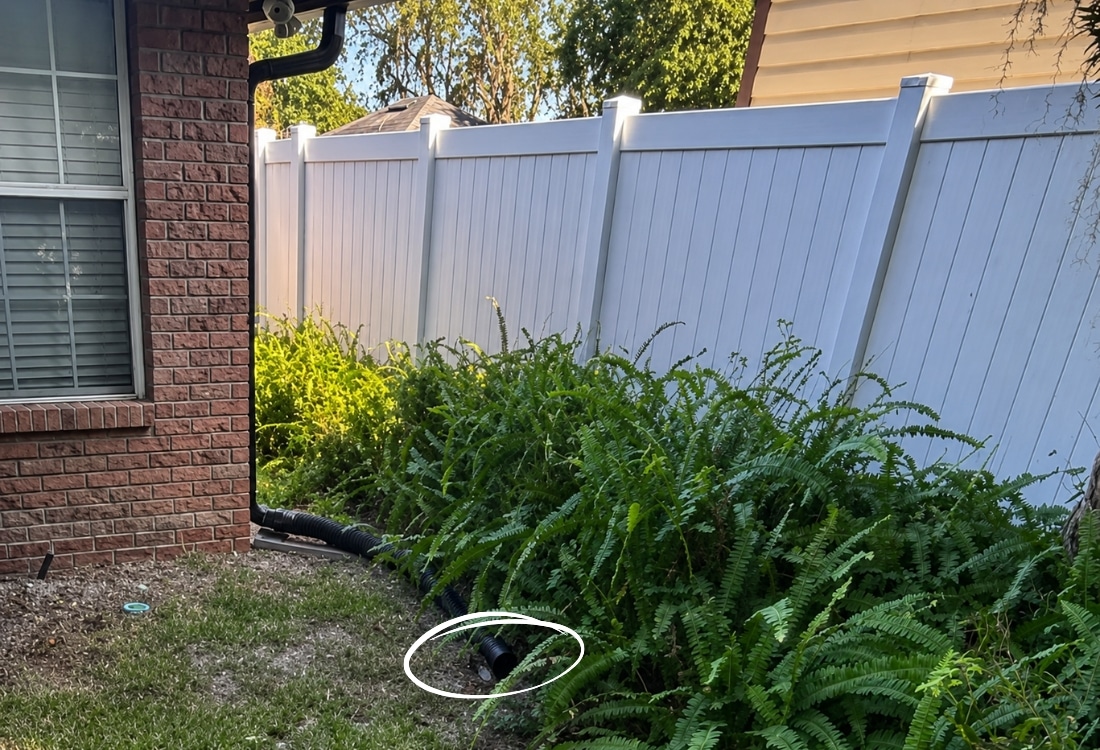
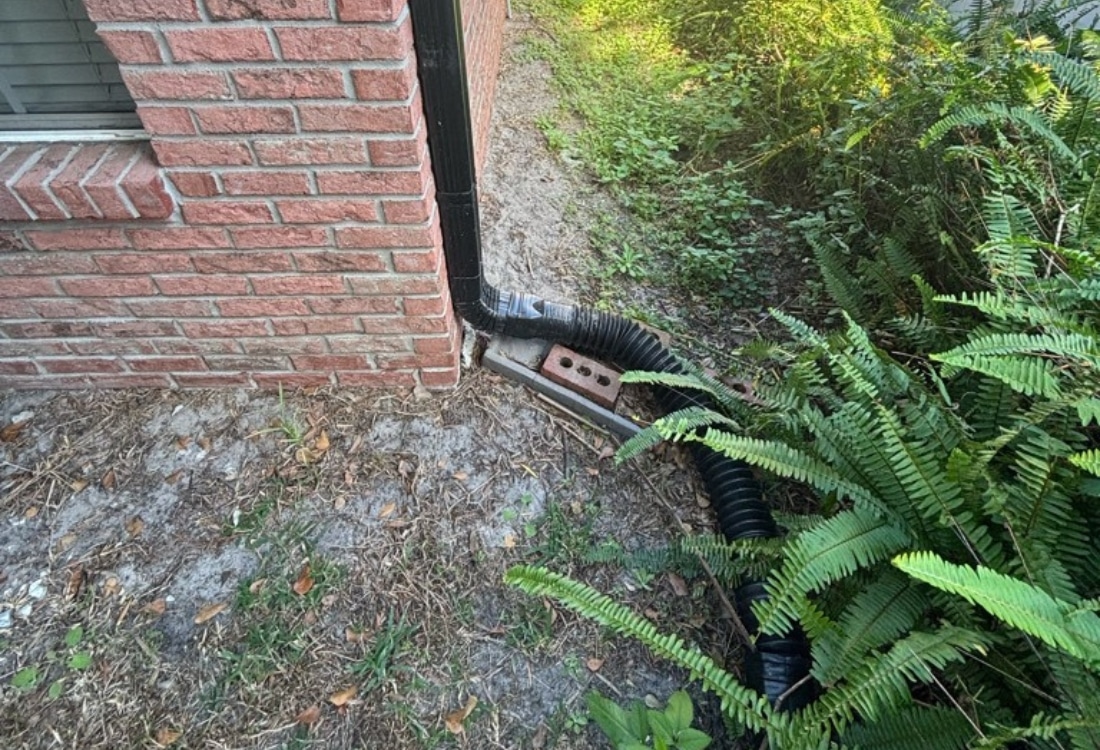
Black corrugated flex downspout discharging water near foundation base in Jacksonville, FL, causing eroded soil and water damage.

Carol contacted LUX Foundation Solutions because the drainage situation at her Jacksonville, FL brick home was quietly doing damage with every rain event. Roof runoff was discharging directly at the base of the foundation, soaking into the soil where it should remain dry. 

Many homeowners don’t realize this is happening until the signs are already visible. By the time she reached out, the signs had already become visible across the property. 

Here is what was documented:

  • Existing corrugated flex downspout extensions sitting on grade, propped against the foundation, dumping water runoff directly at the base of the wall. 
  • Bare, sandy, and eroded soil along the side yard, a direct result of years of uncontrolled water discharge at grade level.
  • Visible erosion channels cut into the ground alongside the home, showing where water pooling had been carving a path with every rain event.
  • No underground drainage system in place, no pop-up emitters, no basins, no capture points anywhere on the property.

In our experience working across Northern Florida, a short corrugated flex extension on grade is one of the most common poor-drainage setups and is among the most misunderstood. It looks like a solution, but it is not. It just moves the discharge point a few inches from the wall while still depositing all that water at the foundation base. Without an effective drainage system in place, that water has nowhere to go except into the soil right next to the home’s foundation. 

In Jacksonville, the soil is sandy and loose. When water keeps hitting the same spot over and over, it starts washing that soil away. What looks like a small erosion mark on the surface can quietly get worse underneath, and once the soil beneath the footing starts to shift, you are no longer dealing with a drainage issue. You are dealing with a foundation problem and that is when costly water damage becomes a real risk. 

These are common signs of foundation drainage problems that get worse with every rain event if left unaddressed.

The Solution: Underground Downspout Extension Installation

To stop roof runoff from reaching the foundation, LUX designed and installed an underground downspout extension at Carol’s Jacksonville home. Every component was purpose-built to capture water at the source, move it away from the structure through a connected underground network, and discharge it safely well away from the home. 

Step 1: Downspout Connection and Underground Extension 

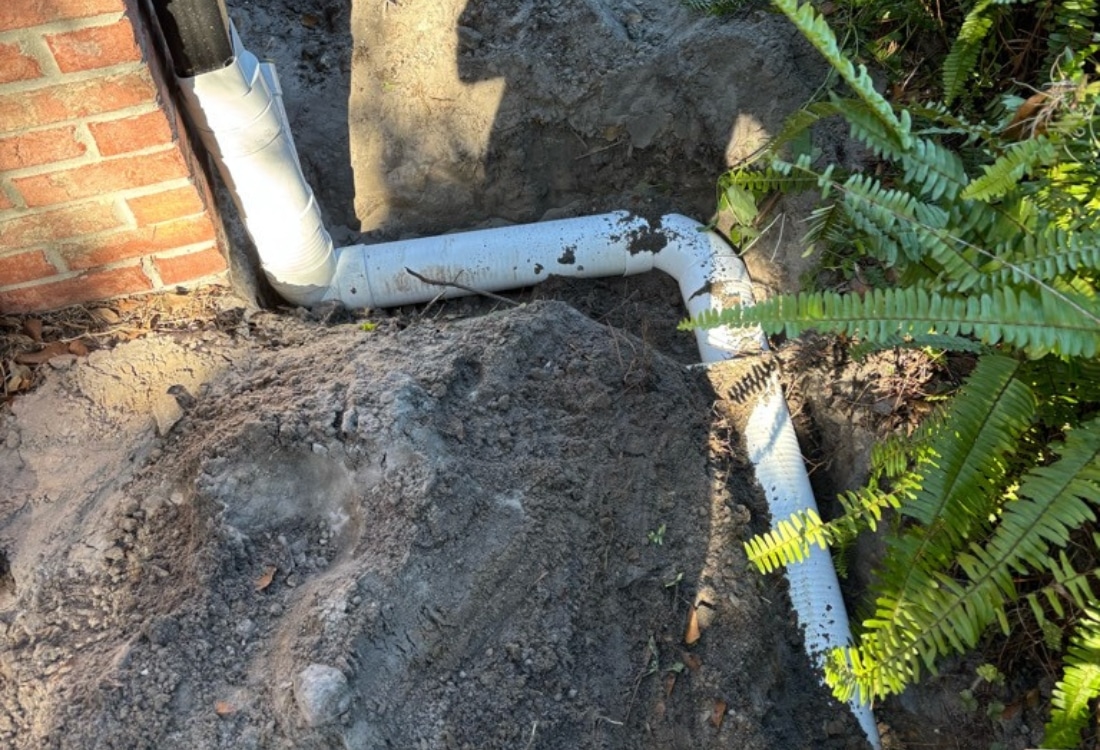
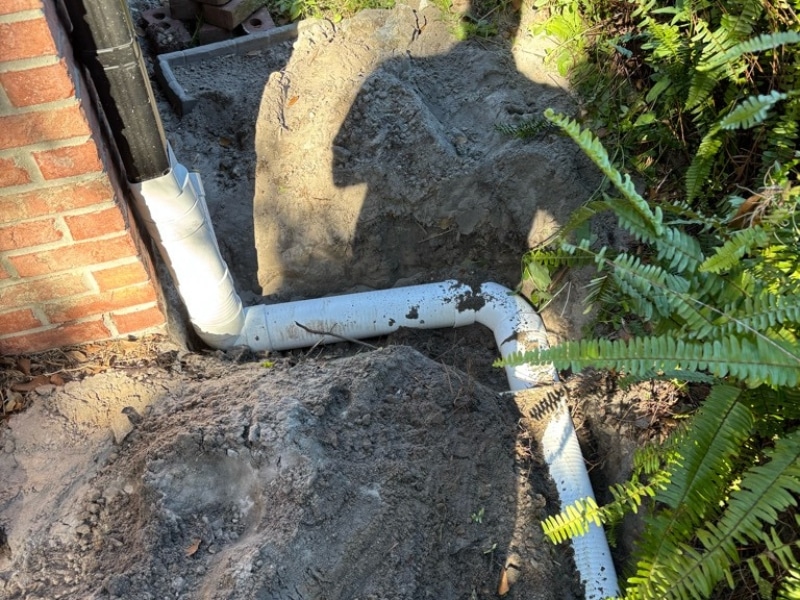
Downspouts were disconnected from the existing gutter system’s  corrugated flex extensions and connected directly to the underground PVC pipe, with a 90-degree turn right at the wall. Water goes straight down, and underground the moment it leaves the downspout, ensuring proper water flow away from the foundation from the very first connection point.

Getting this connection tight matters more than most people realize. Any gap or loose joint here means water escapes right at the foundation base before it ever reaches the underground run. We see this happen on a lot of DIY setups, and it means the homeowner went through all that work for a system that still leaks at the worst possible spot.

Step 2: Y-Connector Junction Point Installation

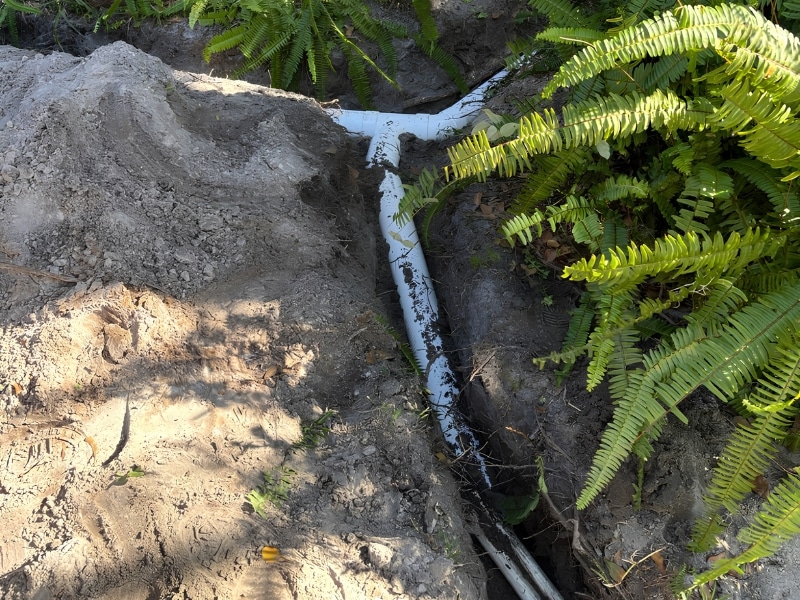
Where the two downspout pipes meet underground, we installed a Y-connector to bring them together into one single pipe run. We also added a clean-out fitting right at that junction, so if anything ever blocks the line, Carol can clear it without digging up the yard. 

In our experience, this is one of the things homeowners appreciate most, years later, when a simple maintenance issue arises, and they do not have to excavate the yard to address it. 

Step 3: Drain Basin Installation 

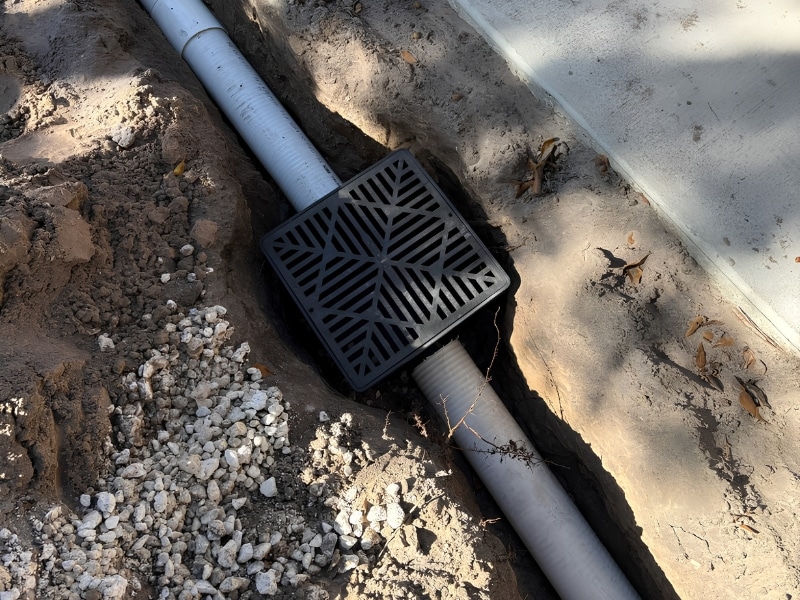
Two 12x12in pro-grade square drain basins were installed alongside the patio to catch any surface water before it reaches the foundation. Each one sits flush with the ground, connected to the underground pipe, and locked in place with a concrete patch. 

Standing water that previously had no collection point now flows directly into the basins and into the underground system. The black grate on top blends in with the surrounding area so the patio still looks clean while the effective drainage system does its job underneath. 

Step 4: Full Pipe Installation Alongside Patio 

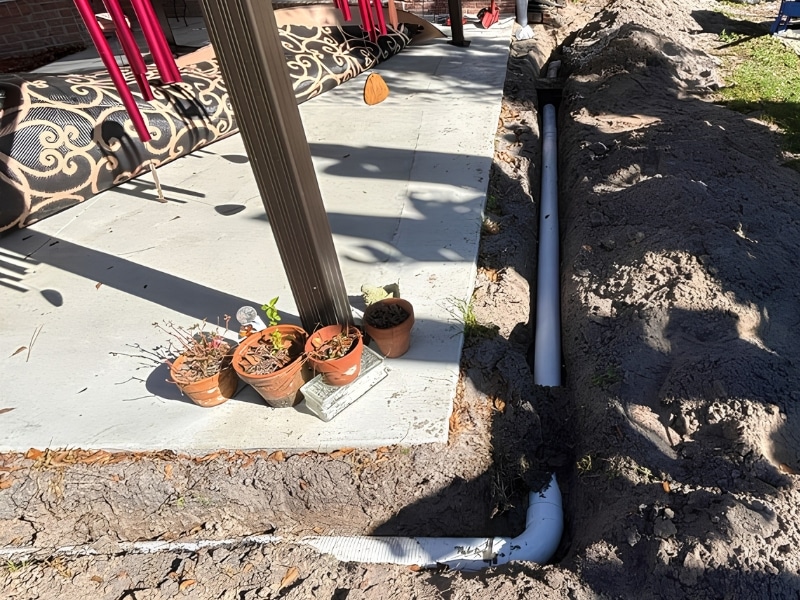
A solid discharge pipe was extended approximately 32 feet underground from one of the basins to the side gutter downspout, connecting everything into one complete system.

Running it alongside the patio keeps the whole drainage network in one straight corridor, so if anything ever needs attention down the road, it is easy to find and access.

Step 5: Pop-Up Emitter Installation and Site Restoration 

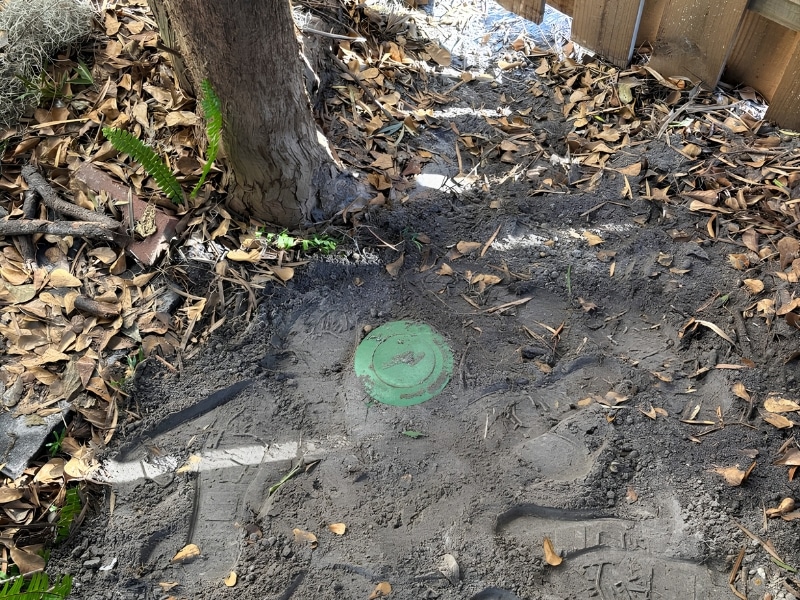
The discharge pipe terminates with a green pop-up emitter installed flush in the soil well away from the foundation. The emitter opens to release water only when the system is actively flowing, and closes when dry, keeping debris and pests out of the pipe. 

Once everything was in place, all the trenches were backfilled, and the yard and patio area were cleaned up and left tidy.

The Results: Controlled Drainage and a Protected Foundation in Jacksonville, FL 

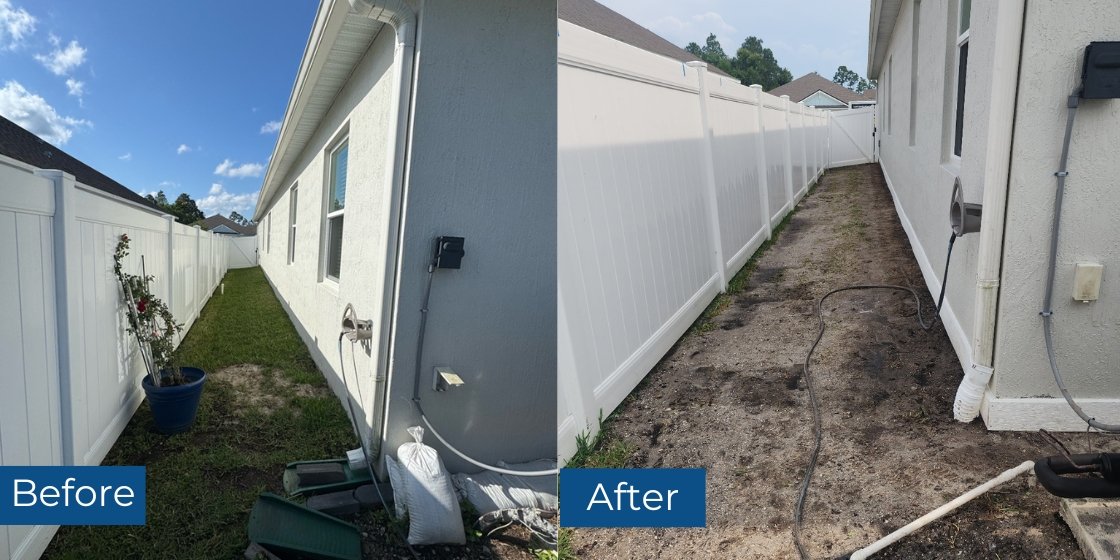
Corrugated flex downspout discharging water at foundation base before drainage downspout extension installation in Jacksonville, FL. Downspout connected to white PVC pipe routed underground replacing corrugated extension after drainage installation in Jacksonville, FL.

Before the installation, every time it rained, water was ending up right where it should not be at the base of Carol’s foundation. After LUX installed the underground downspout extension system, that water now has somewhere to go. It gets captured, moves through the underground pipe, and comes out well away from the home. 

The results include:

✅Roof runoff that used to discharge at the foundation base now travels 70 feet underground before it surfaces; the foundation base stays dry regardless of how hard it rains.

✅The erosion channels that had formed alongside the home are no longer being fed by repeated water discharge at grade level, and the soil can begin to stabilize.

✅Surface water that previously had no collection point now flows into the catch basins alongside the patio and into the underground system before it reaches the foundation.

✅The sandy soil along the side yard is no longer receiving concentrated repeated water discharge, removing the ongoing risk of excess moisture undermining the footing.

✅The pop-up emitter releases water well into the yard away from the structure, so the discharge point is where it should have been from the beginning.

✅Long term protection against costly water damage is now built into the property through a properly engineered underground drainage solution. 

Burying downspouts underground is one of the most effective ways to manage rainwater in Florida homes, especially in sandy coastal soil, where surface discharge creates progressive erosion that compounds with every storm season. In our experience, homeowners who address foundation drainage at this stage protect themselves from much more significant repair costs down the road.

Don’t Let Your Downspouts Damage Your Foundation 

If your downspouts are discharging at grade level right next to your foundation, the soil around your home is absorbing that water with every rain event. In Northeast Florida, where sandy soil erodes quickly under concentrated water discharge, this problem gets worse over time, not better.

LUX Foundation Solutions provides complete drainage solutions across Northern Florida communities, backed by proper engineering and warranties. 

If you are seeing signs of drainage problems near your home, contact us today at 904-231-9926  for a free on-site assessment.

Gallery

About the Author

Bridget Stieb

Bridget is the Director of Marketing at Lux Foundation Solutions, bringing firsthand knowledge of the foundation repair, basement waterproofing, crawl space repair, concrete repair, and seawall needs of homeowners across Northern Virginia, the Shenandoah Valley, North Central Virginia, West Virginia, and Florida. She works closely with structural repair specialists to translate real-world inspection and repair data into homeowner guidance on foundation, basement, crawl space, and concrete issues. With a deep understanding of local homeowner concerns in both regions, she is committed to delivering clear, trustworthy content that helps families protect their homes. When she is not working on a marketing strategy, Bridget enjoys spending time with her family, friends and being outdoors.

Related Resources

SHARE:

Scroll to Top