Written By Bridget Stieb, Director of Marketing at LUX Foundation Solutions • Reviewed by LUX’s foundation repair specialists serving Northern Virginia & Florida
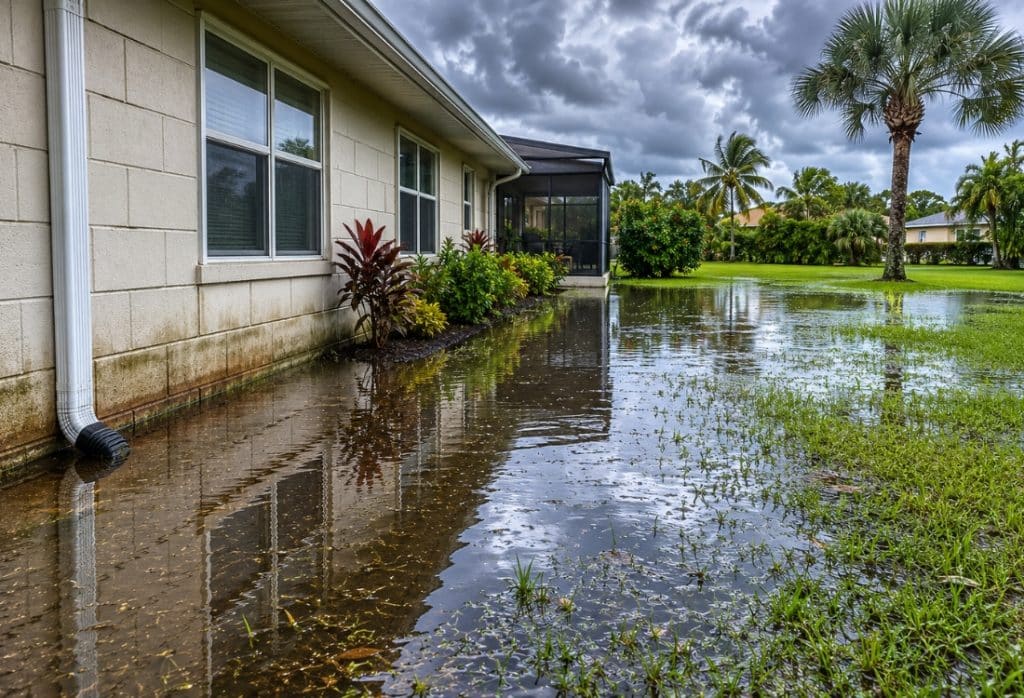
Picture this. You step outside the morning after a summer thunderstorm and notice water still sitting against the base of your home’s foundation. It has been more than 24 hours. It has not moved.
That is not just poor drainage. That is your foundation absorbing pressure it was never designed to handle.
Water pooling around your foundation is one of the most overlooked sources of structural damage homeowners face. It builds slowly, works quietly, and by the time the signs show up inside your home, such as sticking doors, uneven floors, and cracks in the walls, the damage has already been developing for months or years.
This guide covers why it happens, what it does to your foundation over time, and exactly what you can do about it before it becomes a costly repair.
Key Takeaways
- Water pooling around your foundation is not a minor landscaping issue. It is a structural risk that gets worse over time and gets more expensive to address the longer it goes unresolved.
- The most common causes are poor grading, clogged gutters, and improperly placed downspout extensions.
- When water consistently saturates the soil around your foundation, it creates hydrostatic pressure that contributes to cracks, bowing walls, crawl space moisture, mold growth, and in Florida, termite entry points.
- Surface fixes like extending downspouts and regrading the yard resolve most pooling problems when caught early. Persistent pooling that survives basic fixes usually means water needs somewhere to go underground.
- If you are seeing foundation cracks, sticking doors, uneven floors, or crawl space moisture alongside pooling water, the damage may have already started. A professional drainage assessment is the most reliable next step.
Why Water Pooling Around Your Foundation Is More Damaging Than You Think
Most homeowners assume puddles or standing water around the house are a yard drainage issue. They are not. Once water sits against your foundation for extended periods, it starts a slow chain of damage that touches nearly every major system in your home.
In Florida, these conditions can cause foundation damage to develop more quickly than in many other states. Florida receives more than 54 inches of rain each year, with much of it falling between June and September. When that rainfall overlaps with hurricane season, the soil around foundations can remain saturated for weeks between storms.
Add flat terrain, sandy soil that saturates quickly during extended storms, and clay soil that expands and contracts with every wet and dry cycle, and even minor grading issues become poor foundation drainage problems after a single heavy rainfall.
Knowing your soil type helps determine which solution will work best for your property.
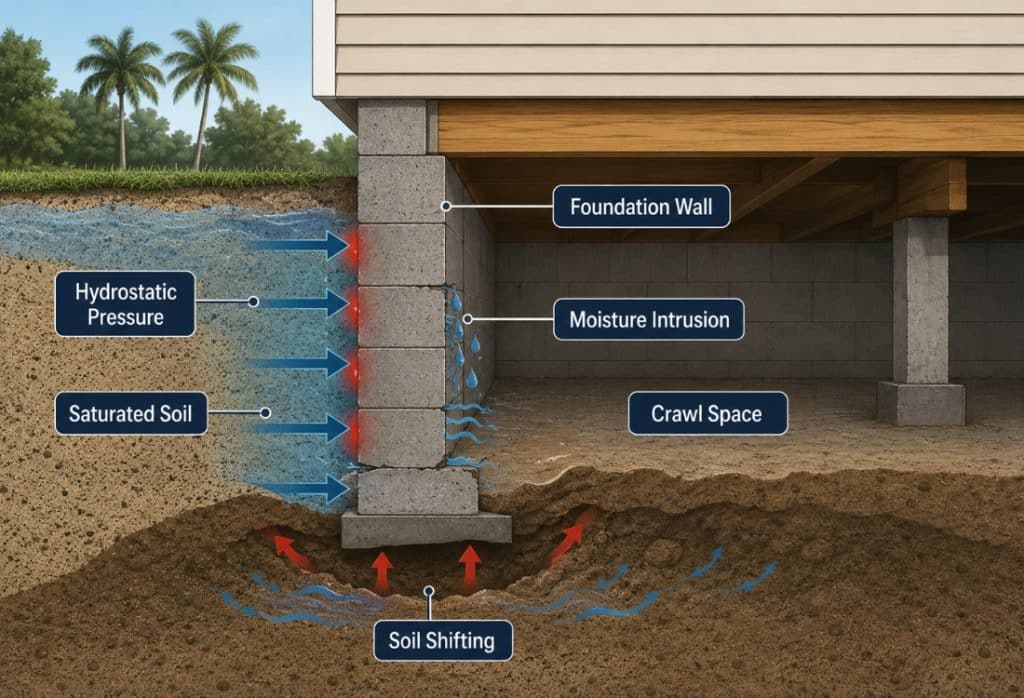
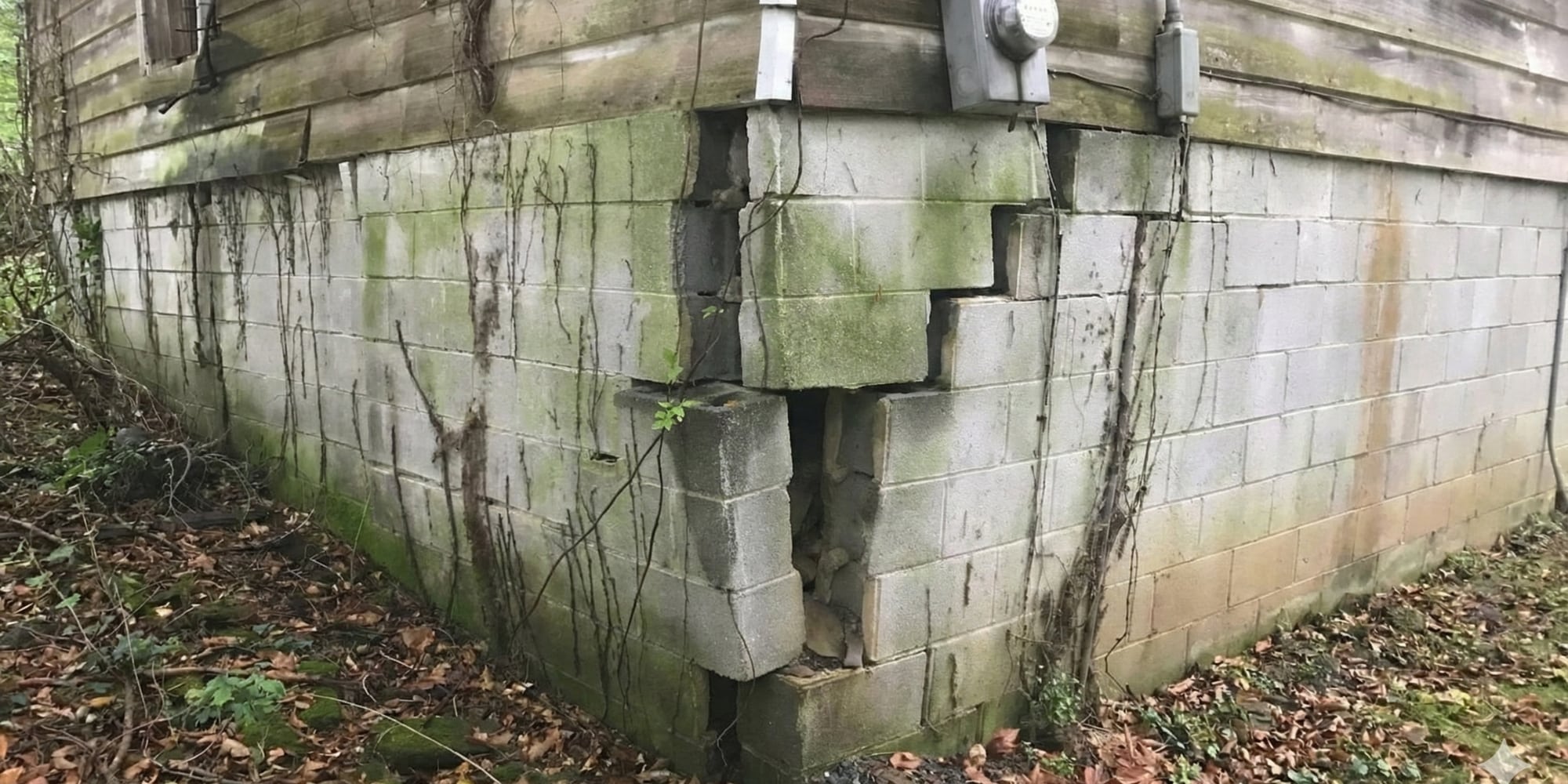
Excessive moisture in the surrounding soil creates water intrusion through tiny gaps in concrete or block walls. Over time those gaps widen, erosion weakens the surrounding soil, and the foundation begins to settle unevenly. The structural chain reaction looks like this:
- Saturated soil loses its load-bearing capacity.
- Foundation walls bow inward under lateral soil pressure.
- Crawl space humidity spikes, accelerating wood rot on floor joists.
- Mold and mildew colonize floor joists, insulation, and drywall, thriving in the damp environments created by foundation moisture.
- Subterranean termites are drawn to the moist soil and moisture-damaged wood.
- In severe cases, the foundation slab cracks, shifts, or settles unevenly.
Structural issues like these are consistently among the most significant problems flagged during home sales affecting buyer confidence, lender financing, and appraised value.
The Most Common Causes (and Why They Keep Happening)
Before you can fix the problem, you need to know what is causing it. Water does not pool against a foundation by accident. Something specific is directing it there. Here are the most common culprits.
Poor Yard Grading and Negative Slope
The ground around your foundation should slope away from the house at a minimum of one inch per foot for the first six feet. When soil settles, erodes, or was never properly graded during construction, it can create a negative slope that channels water directly toward the foundation instead of away from it.
This is one of the most common and most overlooked causes of foundation pooling. You may not notice it until water consistently shows up in the same spot after every storm.
Clogged or Undersized Gutters and Downspouts
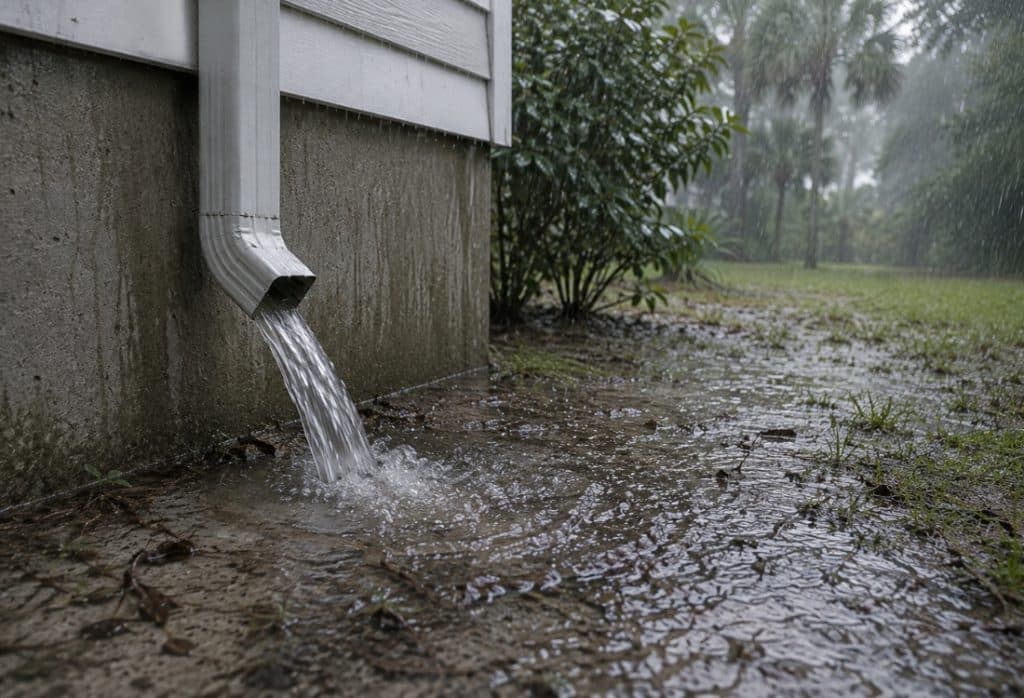
The rain gutter system collects roof runoff and directs it to downspouts. When gutters are clogged, damaged, or too small for the roof area they serve, water overflows and falls directly against the foundation line. When downspouts discharge too close to the house, typically less than six feet away, roof runoff can collect near the foundation instead of draining away from it.
During a single heavy storm, roof runoff can account for thousands of gallons of water; where that water lands matters enormously.
Irrigation System Leaks Near the Foundation
This cause is easy to miss because it happens slowly and often goes undetected until the damage is already done. In-ground irrigation systems that spray directly against the foundation, or that have developed leaks in lines running close to the structure, can saturate the surrounding soil continuously, not just after rain events.
If water keeps pooling next to the house’ foundation even when it has not rained, your irrigation system may be the source. A sprinkler aimed at the foundation or a leaking irrigation line buried nearby can keep the surrounding soil wet even when there has been little or no rain.
Compacted Soil and Lawn Thatch
St. Augustine and Bermuda grass lawns in Florida can build up a thick thatch layer over time. This layer consists of dead grass stems and roots that collect between the soil and the living grass. When that layer gets too thick, the soil loses its ability to absorb rainwater effectively and may instead run toward the lowest part of the yard, especially near raised beds or landscaping features that border the foundation.
Compacted soil beneath the surface has the same effect. When soil loses its water absorption capacity through foot traffic, heavy equipment, or years of compression, surface water has nowhere to go and follows gravity toward the foundation.
How to Fix Water Pooling Around Your Foundation
The right fix on how to stop water pooling around the foundation depends on how much water you are managing and where it is coming from. Most pooling problems can be resolved with surface corrections alone. Some require an underground drainage solution. Start with the simplest fix and work up from there.
Regrade Your Yard to Create Proper Slope
The ground around your foundation should slope away from the house at one inch of drop per foot for the first six feet. If it does not, water will always find its way back toward the foundation regardless of what other fixes you put in place.
You can get a quick idea of the current grade with a ten-foot 2×4. Place it on the ground with one end against the foundation wall and the other extending into the yard. Place a level on top. If the bubble shows the board is level or slopes back toward the house, the ground needs to be regraded. Proper grading with compactable fill helps create a slope that directs water away from the foundation. Avoid using mulch or loose topsoil alone in areas next to the foundation as these materials retain moisture rather than shed it.
Extend Your Downspouts at Least Ten Feet from the Foundation
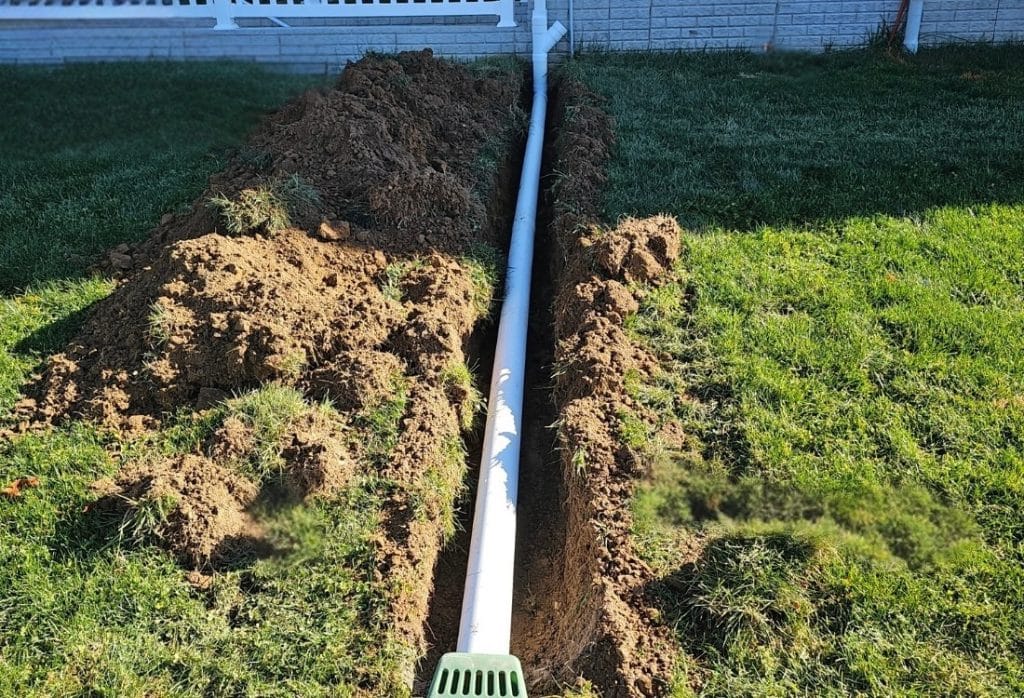
Most downspouts terminate two to three feet from the house. That is close enough to dump concentrated roof runoff directly into the zone you need to keep dry. Extending each downspout a minimum of ten feet redirects that volume away from the foundation before it reaches the soil surrounding the structure.
Use solid extensions rather than corrugated pipe. Corrugated pipe traps debris, collapses over time, and reduces drainage efficiency. Make sure the outlet points downhill and away from the home.
Install Splash Blocks and Downspout Diverters
Where full extensions are not practical, splash blocks placed at the base of each downspout break the force of concentrated discharge and encourage water to spread and move away from the foundation. Position them on a slight outward grade so water does not pool at the discharge point.
Downspout diverters work similarly, redirecting flow laterally along the foundation perimeter rather than straight down into the soil at the base of the wall.
Build a Swale or Dry Creek Bed to Channel Runoff
If regrading does not give the water a place to drain, a graded swale or dry creek bed can direct water flow away from the foundation toward a suitable discharge point. A swale is a shallow depression in the yard with a gentle slope toward a drainage outlet, particularly useful where paved areas like driveways or walkways contribute to surface runoff toward the foundation. A dry creek bed works in much the same way, using decorative stone to create and guide the drainage path.
Important: Never direct redirected water onto a neighboring property. In Florida, property owners have legal obligations regarding how and where stormwater is discharged. Redirecting water toward a neighbor’s property can create legal liability and may violate local drainage easements or HOA rules.
Install a French Drain
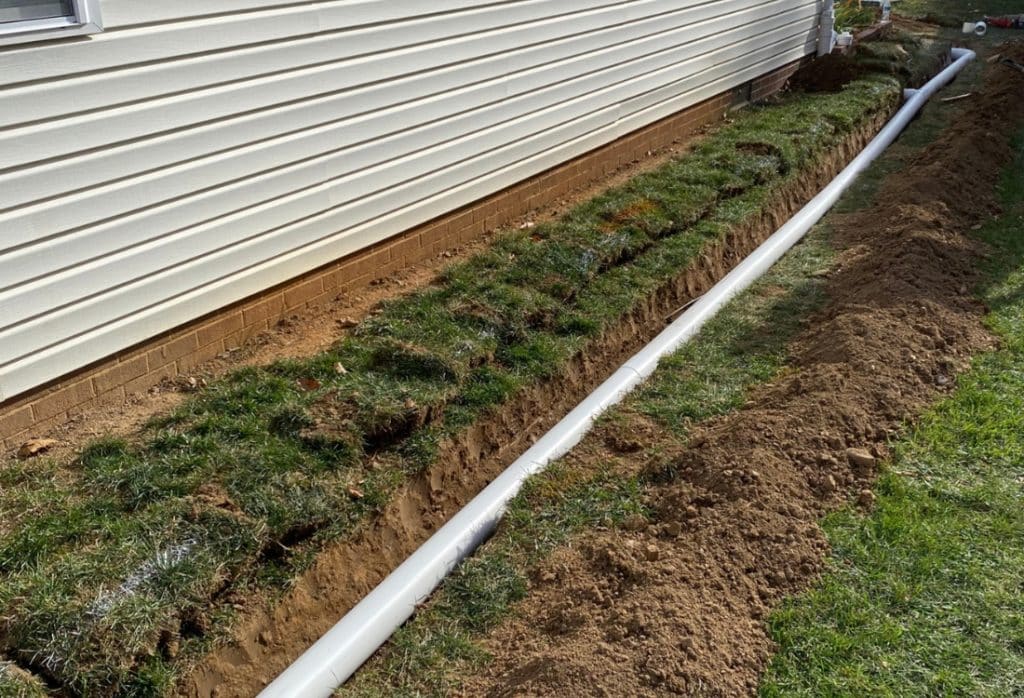
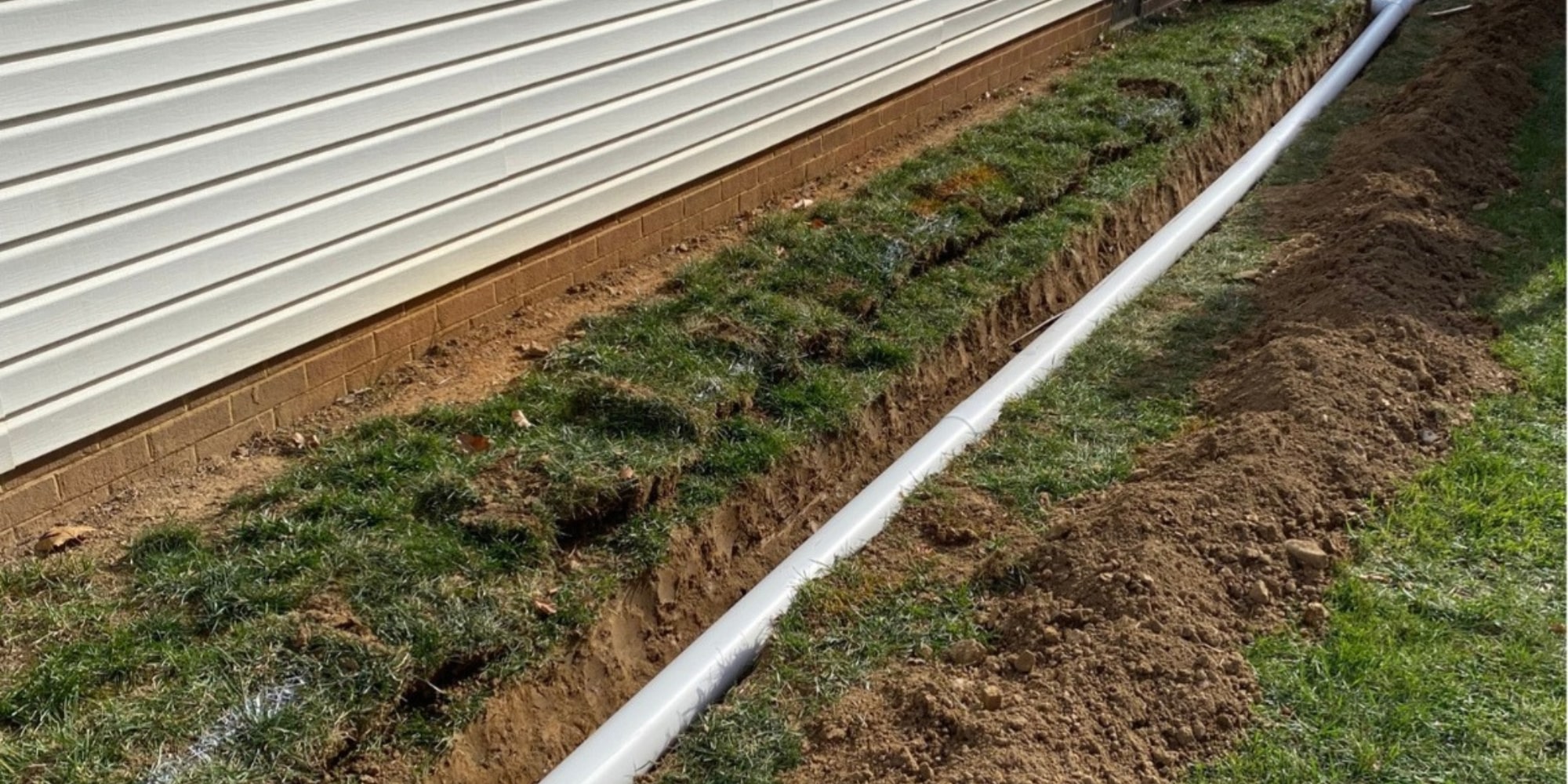
If surface grading does not solve the problem, installing French drains along the foundation perimeter collects water before it reaches the structure and directs it underground to a safe discharge point. The system consists of a gravel-filled trench and perforated pipe, which can be placed along the foundation or through low areas of the yard.
This works especially well on flat properties where surface drainage cannot provide enough slope to keep water moving away from the foundation.
When to Call a Professional
Surface drainage fixes can solve many foundation pooling problems when they are addressed early. But there are situations where regrading, extending downspouts, and adding splash blocks are not enough. If any of the following apply to your situation, the problem requires a professional drainage assessment.
- Water continues to pool near your foundation within 24 hours after every storm despite surface corrections.
- You are seeing foundation cracks, sticking doors, uneven floors, or crawl space moisture alongside the pooling.
- Your yard is too flat to regrade effectively toward a natural outlet.
- Excess water during heavy rain events overwhelms what surface drainage alone can manage.
- You have already tried surface fixes and the pooling keeps returning.
A professional drainage assessment evaluates your yard grading, soil conditions, downspout placement, and existing drainage systems to identify the root cause and recommend the right solution for your property.
How to Prevent Water Pooling Around Your Foundation Long-Term
Fixing a drainage problem is one thing. Keeping it from coming back is another. These are the maintenance habits that protect your foundation year-round.
Before hurricane season:
- Clear gutters and flush downspouts before June.
- Confirm all downspout extensions are in place and pointed away from the foundation.
- Walk the perimeter after the first heavy storm and note any new pooling locations.
After heavy rain events:
- Check for standing water within two feet of your foundation.
- If it has not drained within 24 hours, mark the location and note how long it persists.
- Recurring pooling in the same spot after every storm signals a drainage correction is needed.
Quarterly irrigation checks:
- As part of routine lawn care, run each irrigation zone and look for heads spraying directly against the foundation.
- Check for leaking lateral lines near the structure.
- Adjust or repair any heads or lines within two feet of the foundation perimeter.
Annual grading inspection:
- Walk the foundation perimeter and look for low spots or areas that appear flat or slope toward the house.
- Add compactable fill to low areas, or consider a rain garden with water-tolerant plants in consistently wet spots to capture and redirect runoff before it reaches your foundation.
- Recheck after major rain events or landscaping work that disturbs the soil.
Stop Water Pooling Around Your Foundation Before It Becomes a Structural Problem
Water pooling around your foundation is one of those problems that rewards early action and punishes delay. The longer it goes unaddressed, the more saturated the surrounding soil becomes, the greater the pressure on your foundation, and the more expensive the repair when damage finally shows up inside your home.
LUX Foundation Solutions provides free drainage and foundation assessments for homeowners across Jacksonville, St. Augustine, Gainesville, Ocala, Palm Coast, and surrounding areas in Northern and Central Florida. Our team evaluates your yard grading, downspout placement, soil conditions, and existing drainage systems to identify exactly where water is pooling and what is causing it before recommending the right solution for your property.
Call 904-921-3589 or schedule your free assessment online to get started.
ABOUT THE AUTHOR

Frequently Asked Questions
Is water pooling around a foundation dangerous?
Yes. Water that consistently pools against your foundation creates hydrostatic pressure, saturates the surrounding soil, and, over time, contributes to foundation cracks, crawl space moisture, mold growth, and, in warm climates, termite activity. Beyond structural damage, mold growth in the crawl space creates health risks for your household that can develop long before the structural consequences become visible.
How do I stop water from pooling next to my foundation?
Foundation water pooling often starts with a grading problem. The ground should slope away from the foundation at one inch per foot for the first six feet. Extend downspouts at least six feet from the house and clear any clogged gutters. If pooling persists after these corrections, a professional drainage assessment will identify whether an underground solution such as a catch basin or French drain is needed.
What causes water to pool in the same spot near my foundation?
A specific drainage failure at that spot almost always causes recurring pooling in the same location. The most common causes are a negative grade that channels water toward the foundation, a downspout discharging too close to the house, an irrigation leak near the structure, or a low point in the yard with no outlet for the water to drain toward.
How long can water pool around a foundation before causing damage?
There is no fixed threshold, but water that sits against your foundation for more than 24 hours after a storm is applying consistent pressure to the surrounding soil. Repeated exposure over multiple rain events is what causes cumulative damage. The longer pooling goes unaddressed, the more saturated the soil becomes and the greater the pressure on the foundation.
Can water pooling around a foundation cause foundation settlement?
Yes. When soil around your foundation becomes consistently oversaturated, it loses its load-bearing capacity and can shift or compress unevenly beneath the structure. This uneven soil movement causes the foundation to settle, which shows up as sloping floors, sticking doors or windows, and cracks in walls and ceilings.