Written By Bridget Stieb, Director of Marketing at LUX Foundation Solutions • Reviewed by LUX’s foundation repair specialists serving Northern Virginia & Florida
A bowed foundation wall does not straighten itself out over time, and the longer it’s ignored, the more costly repairs. If you have already confirmed your wall is bowing, the real question now is which bowed foundation wall repair method actually fits your situation.
There is no single fix that works for every wall, because not all foundation issues require the same right approach. The right method depends on how severe the bowing is, how much exterior access you have, and what is causing the pressure in the first place.
This guide breaks down the most common repair methods, how each one works, and what makes one a better fit than another, so you can have an informed conversation before a contractor ever shows up.
Key Takeaways
- A bowed foundation wall will not correct itself, and waiting longer reduces the number of viable repair options.
- The right bowed foundation wall repair method depends on the severity of the bow, available space, wall material, and the underlying cause.
- Common repair methods include wall anchors, carbon fiber straps, steel I-beams, wall rebar pins, helical tieback anchors, and full foundation wall replacement.
- Less invasive methods, such as carbon fiber, work well for minor bowing, while more severe cases often require anchors, beams, or full replacement.
- A professional assessment can identify the underlying cause of the problem and help determine which repair is the best fit for your home.
How Foundation Experts Assess Severity Before Choosing a Repair Method
Not every bowed wall needs the same fix, which is exactly why there are several bowed foundation wall repair methods instead of just one.
Repair foundation specialists measure the wall’s deflection on a poured concrete wall or block wall using a plumb line or laser level, along with the wall’s material and the underlying cause, to classify severity. That classification directly determines which repair method is appropriate.
| Deflection Level | Classification | Common Repair Option |
|---|---|---|
| Less than 1 inch | Minor | Carbon fiber straps, monitoring |
| 1 to 2 inches | Moderate | Carbon fiber straps, wall anchors, or wall rebar pins (block walls) |
| 2 to 3 inches | Serious | Wall anchors, steel I-beams |
| More than 3 inches, or retaining wall failure | Critical | Excavation, helical tieback anchors, or full wall replacement |
As a general rule, walls bowing less than two inches can often be stabilized with less invasive structural reinforcement. At the same time, anything beyond that typically requires a method that physically corrects the wall’s position rather than just holding it in place. The sections below walk through each option in detail.
The 6 Most Effective Bowed Foundation Wall Repair Methods
Each repair method addresses bowing foundation problems differently, and choosing among these multiple solutions without a proper diagnosis can drive up repair costs. The method that works best depends on various factors, which is why a professional assessment always comes before any repair recommendation.
At LUX Foundation Solutions, our team evaluates each of the factors during a free foundation inspection before recommending a repair path. Below is a breakdown of the methods LUX offers to stabilize and correct a bowing foundation wall.
1. Carbon Fiber Straps
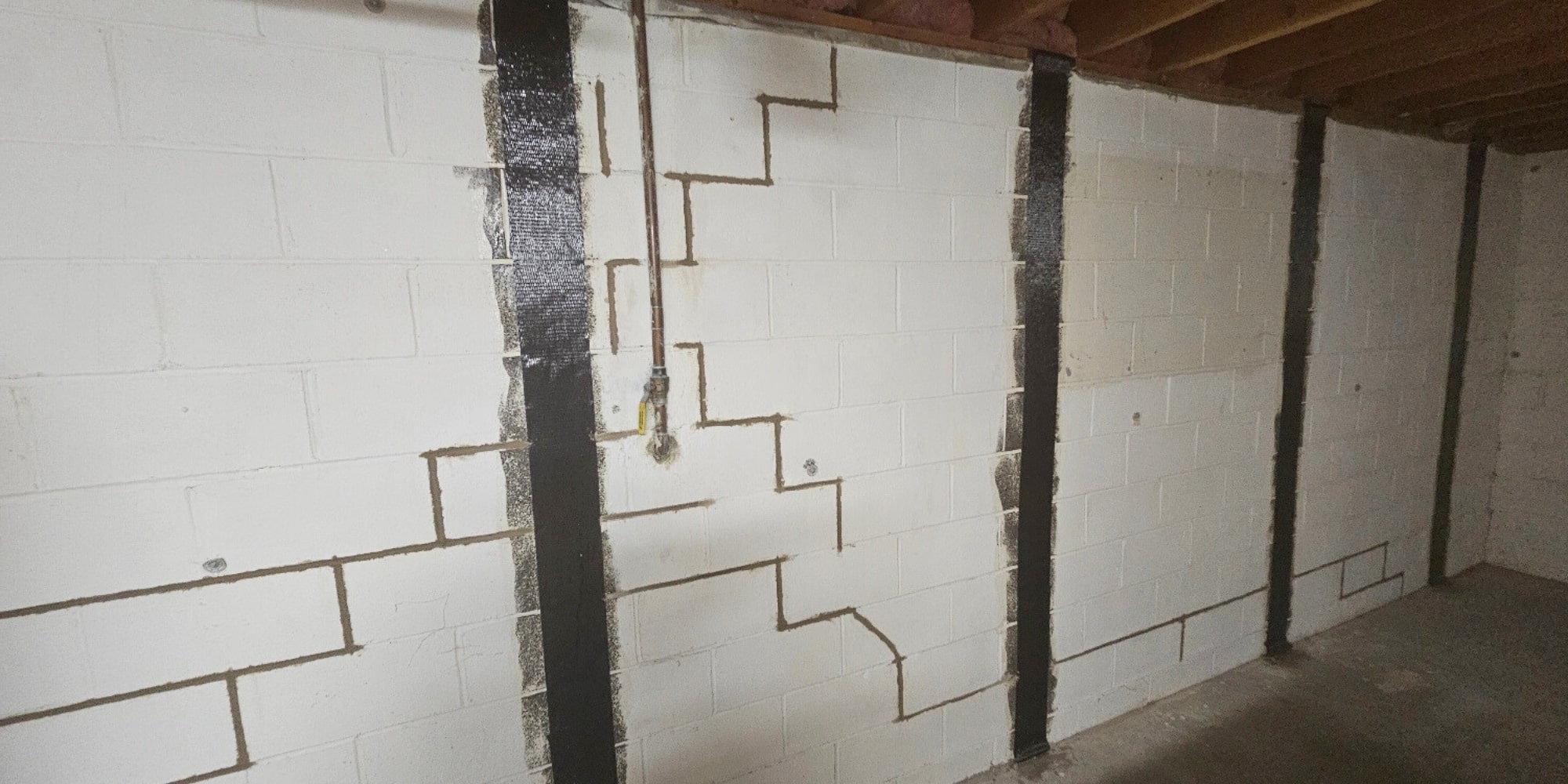
Carbon fiber straps (also called carbon fiber reinforcement straps or CFRP straps) are one of the least invasive bowed foundation wall repair methods used for minor to moderate bowing.
How it works: High-strength epoxy bonds the straps directly to your wall’s interior, creating a reinforcement layer that stops further inward movement and provides long-term foundation wall stabilization.
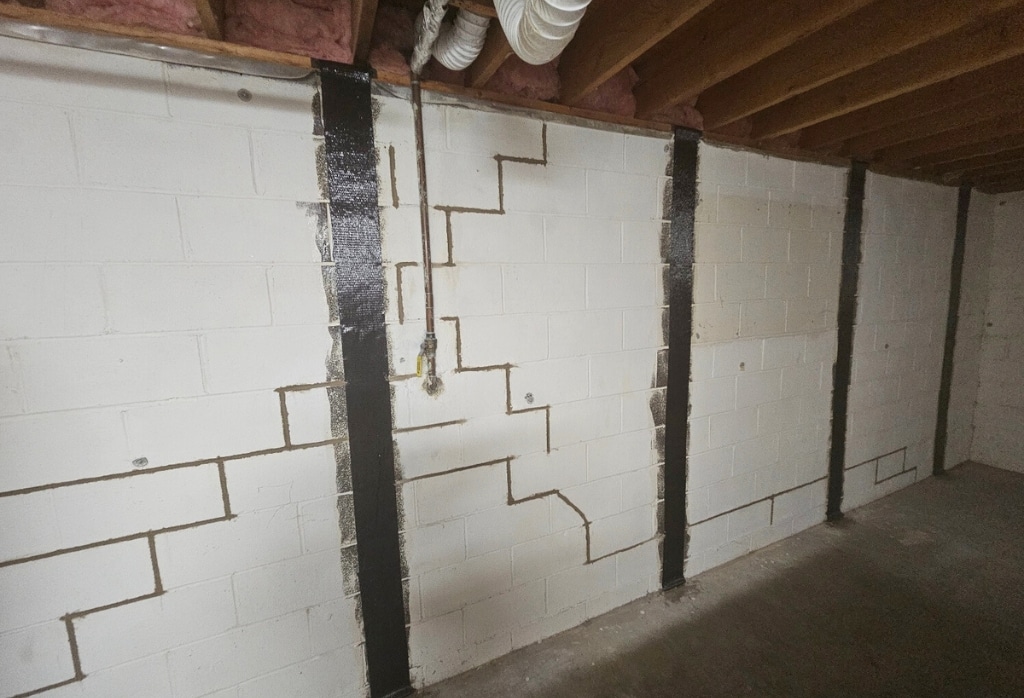
What makes this method necessary:
- No digging or work outside the home.
- Landscaping stays undisturbed.
- Often installed in a single day.
- Corrosion-proof
What it doesn’t do: Carbon fiber straps stop your wall from moving further, but they don’t pull it back into its original position. If your wall’s deflection exceeds 2 inches, a different method is recommended to correct the bow, not just stabilize it.
Best for: Minor to moderate bowing, under 2 inches of deflection, limited yard access.
2. Wall Anchors (Earth Anchors)
Wall anchors are one of the most reliable bowed foundation wall repair methods for correcting moderate to serious bowing in your home, especially when the wall has shifted more than an inch.
How it works: Steel plates are installed on the interior wall, connected to anchors buried in stable soil outside your home, then gradually tightened over time to pull your wall back toward its original position.
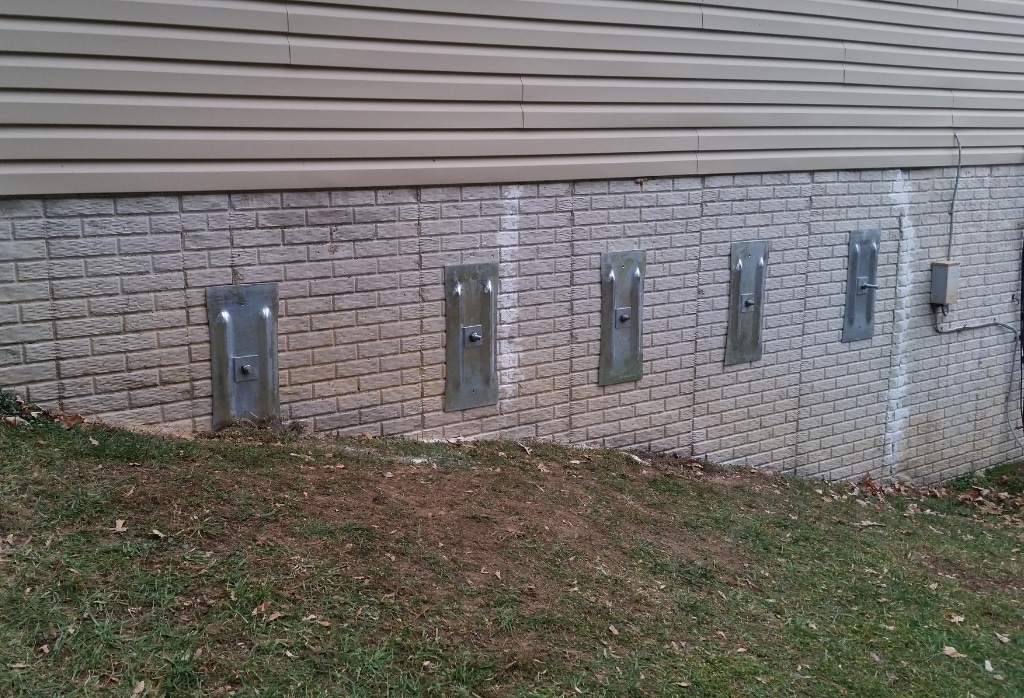
What makes this method necessary:
- Can straighten a bowed wall, not just stop it
- Works on block, poured concrete, or brick walls
- Anchors can be tightened or adjusted over time as the wall responds.
What it requires: Wall anchors need enough exterior yard space to install the outer anchors, so this option depends on your property’s layout. Some disruption to landscaping near your foundation should be expected.
Best for: Moderate to serious bowing, 1 to 3 inches of deflection, homes with adequate yard space.
3. Steel I-Beams (Wall Braces)
Steel I-beams provide your home with a strong, entirely interior bowed foundation wall repair option when yard access isn’t available, or you’d rather avoid exterior work altogether.
How it works: Vertical steel beams are installed against the interior face of your wall, anchored at the floor and ceiling joists, to brace the wall and resist further inward pressure.
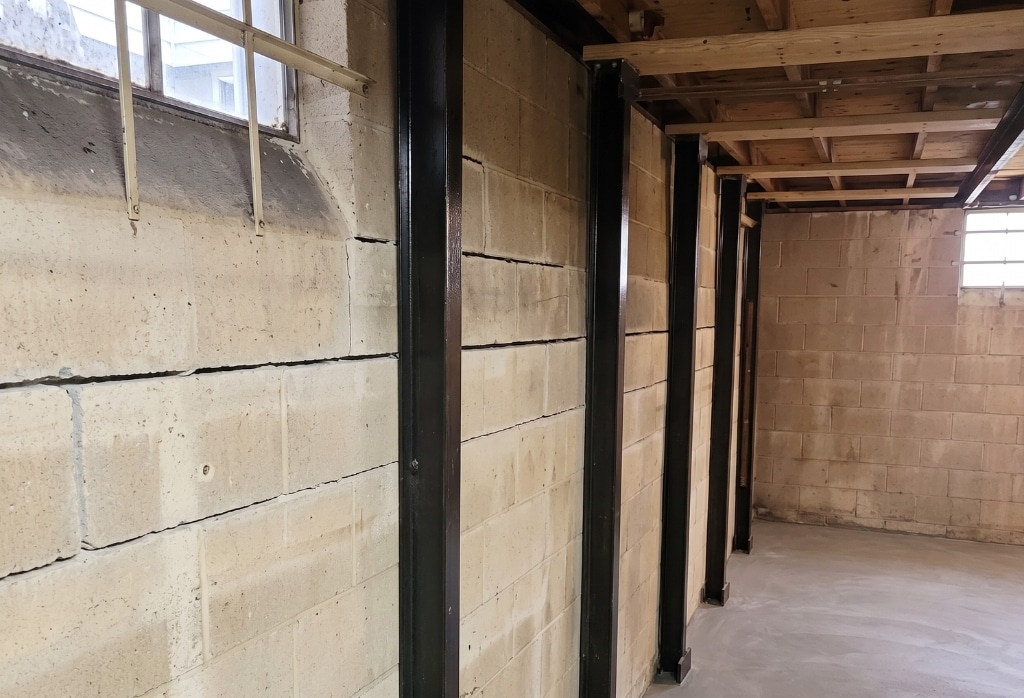
What makes this method necessary:
- No digging or exterior work required
- Strong holding power for moderate to serious bowing
- A practical choice when yard space is limited
What it doesn’t do: Like carbon fiber straps, steel I-beams primarily stabilize your wall rather than pull it back into its original position. For walls that need to be straightened, this is paired with another method or recommend wall anchors instead.
Best for: Moderate to serious bowing, limited or no yard access, interior-only repairs.
4. Wall Rebar Pins
Wall rebar pins are a targeted bowed foundation wall repair method used specifically on block foundation walls, where the construction allows pins to reinforce the wall from within.
How it works: Drill pins through the hollow cores of your concrete block wall and secure them with structural grout, locking the blocks together so they resist further bowing as a single reinforced unit.
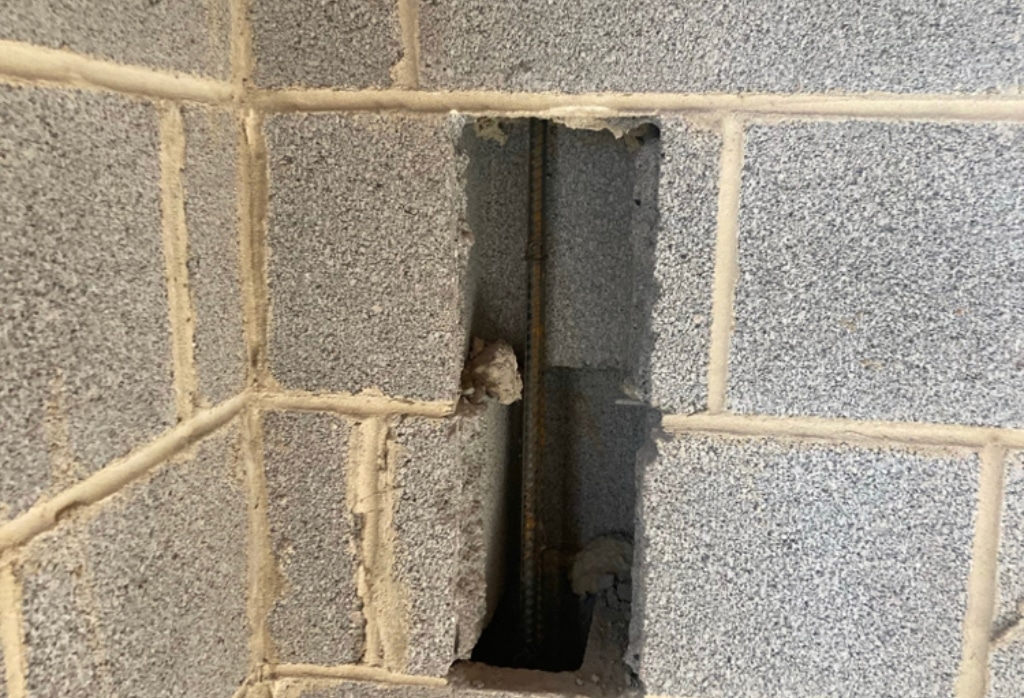
What makes this method necessary:
- Designed specifically for bowing cinder block foundation
- Reinforces the wall from the inside out
- Can often be combined with other methods for added strength
What it requires: This method works only on block walls; if your foundation is poured concrete or brick, a different method is recommended.
Best for: Block foundation walls, minor to moderate bowing, situations where wall material limits other options.
5. Helical Tieback Anchors
Helical tieback anchors are the method used for the most severe cases your home might face, including extreme lateral pressure or retaining wall failure.
How it works: Drive helical anchors deep into stable soil at an angle using a steel shaft, then connect them to your wall with a steel rod and plate, providing significantly more holding power than standard wall anchors for situations under extreme hydrostatic pressure.
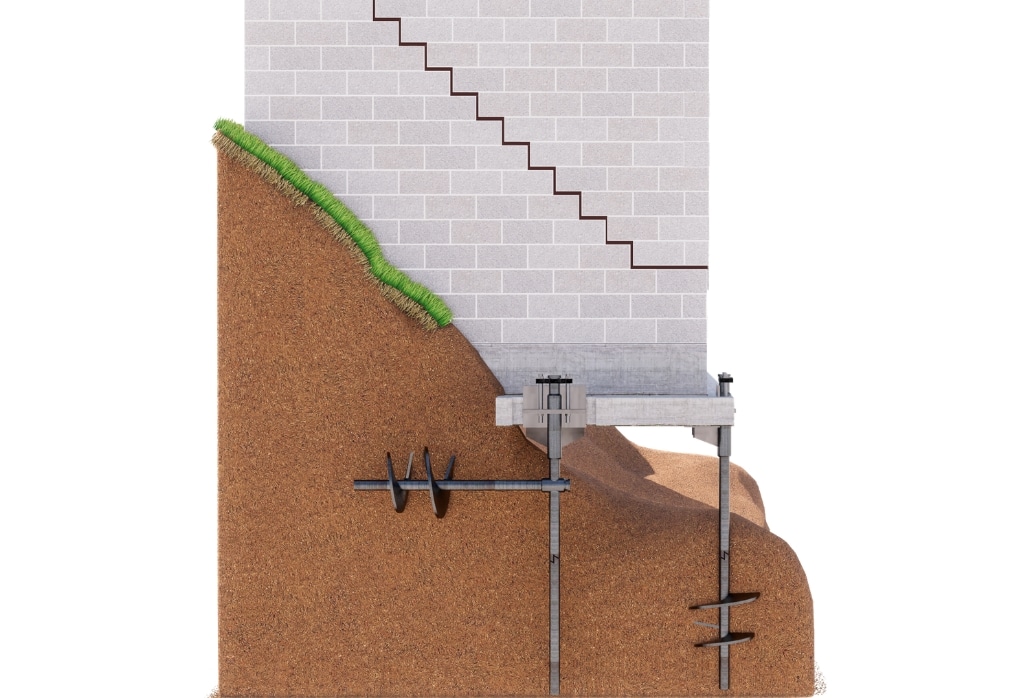
What makes this method necessary:
- Designed for bowed walls or retaining walls with severe deflection or active structural failure.
- Reaches deeper, more stable soil than standard anchors
- A strong alternative to full wall replacement in many critical cases
What it requires: Because of the depth and pressure involved, this method is reserved for critical-tier situations rather than minor to moderate bowing.
Best for: Critical bowing, retaining wall failure, or extreme soil pressure on your home.
6. Foundation Wall Replacement
Foundation wall replacement is the most invasive bowed foundation wall repair method, and it is recommended only when your wall has deflected beyond the point where reinforcement or anchoring can safely correct it. This is also done to protect against further structural damage or eventual collapse.
How it works: Excavate around the affected section of your foundation, remove the damaged wall, and rebuild it to current structural standards, often pairing the new wall with drainage improvements to prevent the same pressure from causing problems again.
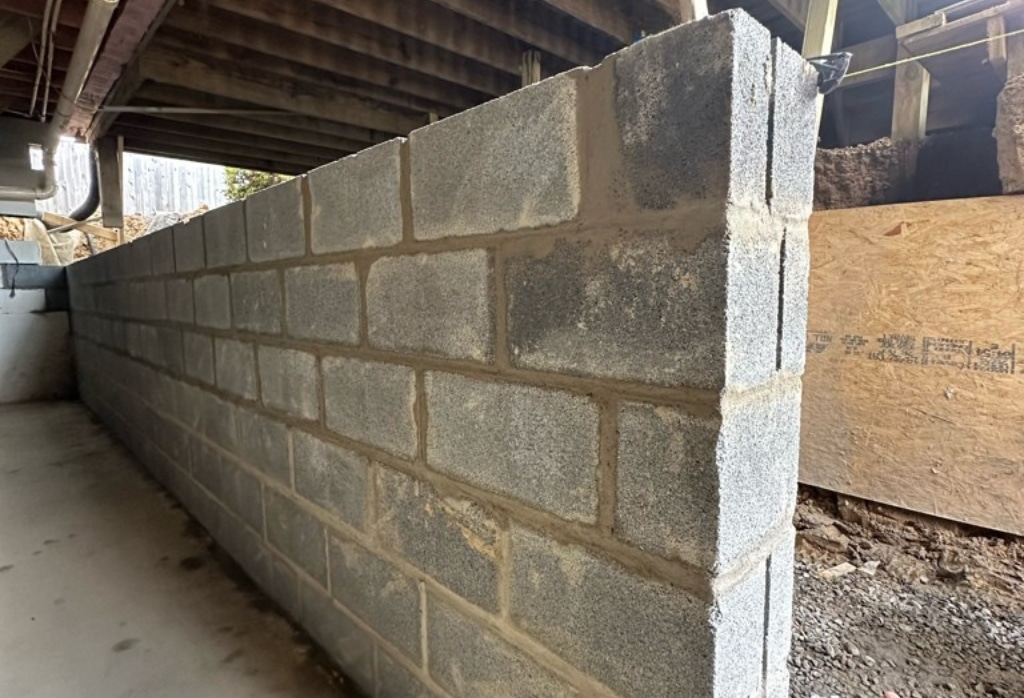
What makes this method necessary:
- Used when deflection exceeds what anchors or beams can safely correct
- Addresses walls with significant structural failure
- Gives your home a fully rebuilt, code-compliant foundation wall
What it requires: This is the most disruptive and time-intensive option, involving excavation around your home’s exterior.
Best for: Critical bowing, structural failure, or walls beyond repair through reinforcement alone.
Ready to Find Out Which Repair Method Fits Your Wall?
A bowing foundation wall does not get better on its own, and ignoring it can affect your home’s property value over time. The right fix depends on factors only a professional assessment can confirm.
If you have a bowing wall in your Florida home, LUX Foundation Solutions offers free foundation inspections to identify the cause, assess the severity, and recommend a repair method tailored to your specific situation.
Call 904-921-3589 or schedule your free assessment online to get started. We proudly serve homeowners in Jacksonville, St. Augustine, Gainesville, Ocala, Palm Coast, and surrounding areas.
Not sure if your wall is actually bowing? See the signs of a bowing foundation wall to confirm before scheduling your repair assessment.
ABOUT THE AUTHOR

Frequently Asked Questions
Is foundation bowing normal?
No, a bowing foundation wall is never considered normal and should not be ignored. Even a slight bow in a foundation wall usually means soil or water pressure is pushing against it. Over time, that pressure can lead to horizontal cracks and more serious structural damage if the underlying problem isn’t addressed promptly.
How do I know if my bowed foundation wall is an emergency?
If the wall has shifted more than 2 inches inward or if you can see visible shearing at the base of the wall, treat it as an urgent structural concern. Contact a foundation contractor within days, not weeks. Walls at this stage can fail more rapidly, especially if heavy rainfall or a freeze event adds additional soil pressure while the wall is already compromised.
Can I repair a bowed foundation wall myself?
DIY repair is not recommended for bowed foundation walls because the structural risks are significant and improper installation of bracing systems can make the problem worse.
While some homeowners apply hydraulic cement to surface cracks, this does not address the underlying lateral pressure causing the bowing. Structural repairs involving carbon fiber straps, wall anchors, or steel beams require professional installation and load calculations to be effective.
How long does bowed foundation wall repair typically take?
Most residential repairs using carbon fiber straps or wall anchors can be completed in one to two days per affected wall.
Larger projects involving multiple walls or those requiring exterior excavation can take anywhere from three to seven days. Your contractor should provide a timeline during the initial assessment phase so you can plan accordingly.
Will my homeowner’s insurance cover foundation wall repair?
Foundation damage caused by long-term soil pressure or water seepage is usually excluded from homeowner’s insurance coverage. However, damage resulting from a sudden, covered event such as an earthquake may qualify for coverage.
Check your policy and contact your insurer before work begins. Depending on your policy, you may have coverage if the damage was caused by a documented flood event or a sudden soil shift. Keep all inspection reports and photographs for documentation.
Does bowed foundation wall repair affect my home’s resale value?
A professionally repaired foundation wall with a transferable warranty typically has minimal negative impact on resale value and is far preferable to an unrepaired bowing wall.
Buyers and their inspectors will flag any visible bowing as a concern during the purchase process. Having documented repairs, a structural engineer’s sign-off, and a transferable warranty reassures buyers and can prevent sale delays or price reductions.