
Written By Bridget Stieb, Director of Marketing at LUX Foundation Solutions • Reviewed by LUX’s foundation repair specialists serving Northern Virginia & Florida
Most homeowners inspect their gutters and downspouts for blockages but rarely consider whether their downspout extensions are long enough. When extensions are too short, they deposit water too close to your foundation with every rain event. The damage does not happen overnight. It builds gradually through repeated exposure until what started as a drainage problem becomes a foundation problem.
This article covers seven signs that your short downspouts may be damaging your foundation, what each sign means structurally, and what to do when you spot them.
Key Takeaways
- Short downspouts that discharge water too close to your foundation are one of the most common and overlooked causes of foundation damage, soil erosion, and crawl space moisture problems.
- The warning signs of short downspouts are often visible at ground level. Pooling water, soil erosion, efflorescence, and foundation cracks near corners are the most common indicators
- Crawl space moisture and musty odors that appear or worsen after rain are strong signals that surface water is reaching beneath your home through the soil.
- Most foundation specialists recommend a minimum discharge distance of six feet from your foundation, with ten feet being a better target in areas with sandy soil, flat terrain, or a high water table.
- In Florida, the combination of heavy seasonal rainfall, sandy soil, and a high water table means short downspouts accelerate foundation damage faster than in most other states.
- If you notice more than one of these signs, a professional drainage assessment is the most reliable way to confirm whether short downspouts are the cause before the damage progresses further.
How Short Downspouts Damage Your Foundation Over Time
A downspout extension that is too short deposits water within one to two feet of your foundation. The damage does not come from a single storm; it comes from repetition. Every rainwater discharge adds more moisture to the same zone, and that accumulated moisture creates three compounding problems over time.
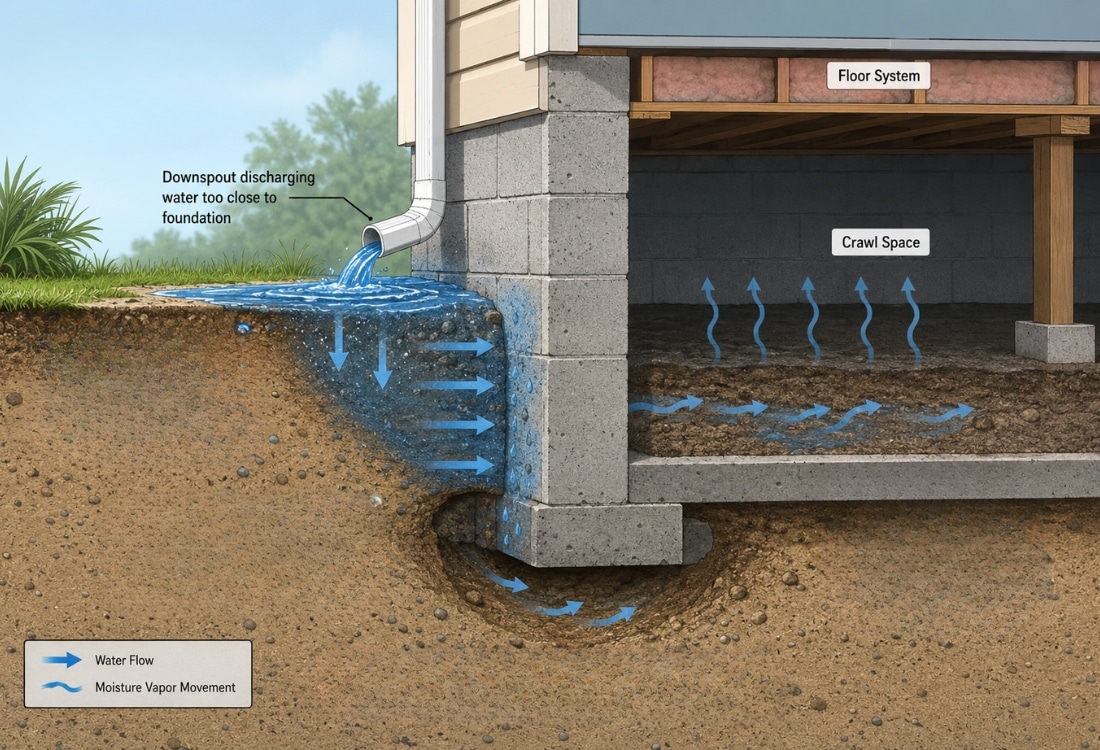
Saturated soil expands and pushes against foundation walls, building hydrostatic pressure that contributes to cracks and inward wall movement. Repeated discharge in the same spot erodes the soil supporting your foundation, creating voids and instability around the structure. According to the U.S. Environmental Protection Agency, unmanaged stormwater runoff is a leading contributor to soil erosion and property damage around residential homes.
In Florida, heavy seasonal rainfall, sandy soil, and a high water table mean these problems develop faster than in most other states. The signs below reflect each of these damage mechanisms in action.
7 Signs Your Short Downspouts Are Damaging Your Foundation
These signs do not always appear together, and some develop more slowly than others. What matters is the pattern. One sign alone may have another explanation, but two or more appearing together, especially after rain events, points strongly toward a drainage problem caused by short downspouts.
1. Water Pooling Near Your Foundation After Rain
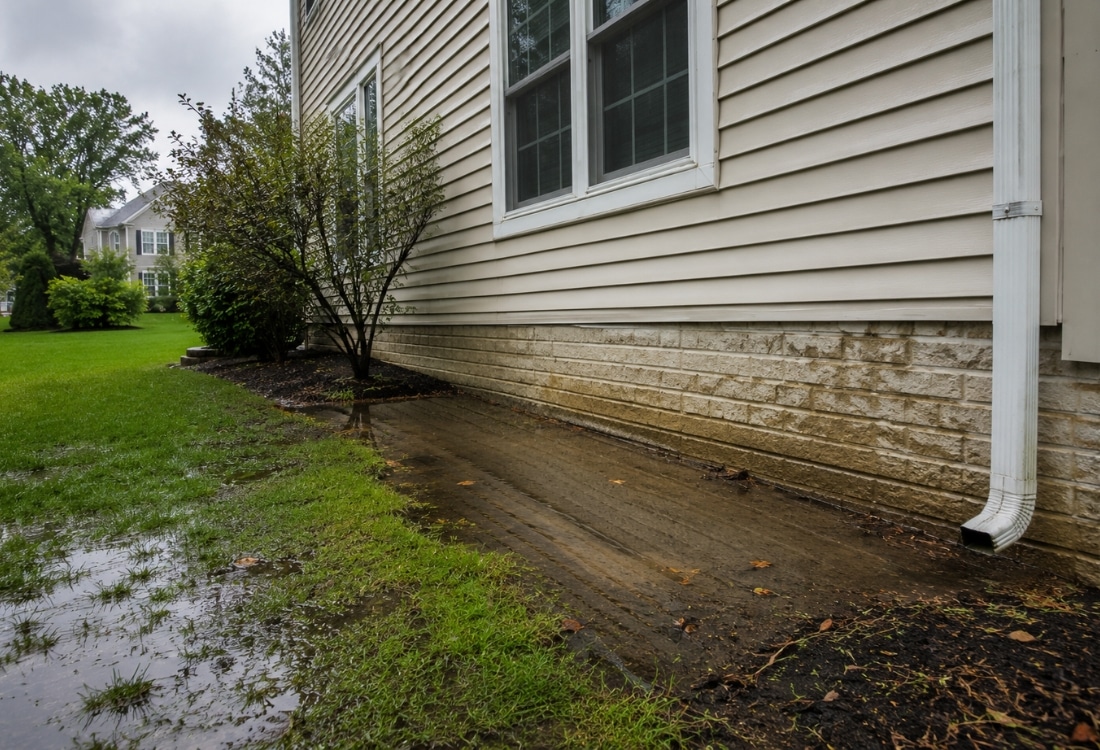
This is the most visible and direct sign that your downspout extensions are not carrying water far enough from your home. When water consistently pools within two to three feet of your foundation after a rain event and takes more than a few hours to drain, the discharge point is too close.
Standing water saturates the surrounding soil, increases hydrostatic pressure on house foundation walls, and creates conditions for cracks and crawl space moisture over time.
In Florida, heavy rain events can drop several inches within hours, making this a recurring source of moisture pressure rather than an occasional nuisance.
What to do: Measure your current discharge distance. If it is under six feet, directing water at least six feet from your foundation is the immediate priority.
2. Efflorescence on Foundation Walls
Efflorescence is the white, chalky residue that appears on concrete or masonry foundation walls when water moves through the material and evaporates, leaving mineral deposits on the surface. It is a reliable indicator that water is consistently reaching your foundation walls and passing through them.
Short downspouts that saturate the soil around your foundation are one of the most common causes. The efflorescence itself is not structural damage, but the water movement causing it is.
What to do: Do not simply scrub the residue away. Address the source of water intrusion first, starting with the discharge distance of your downspout extensions.
3. Soil Erosion at the Base of Your Downspout
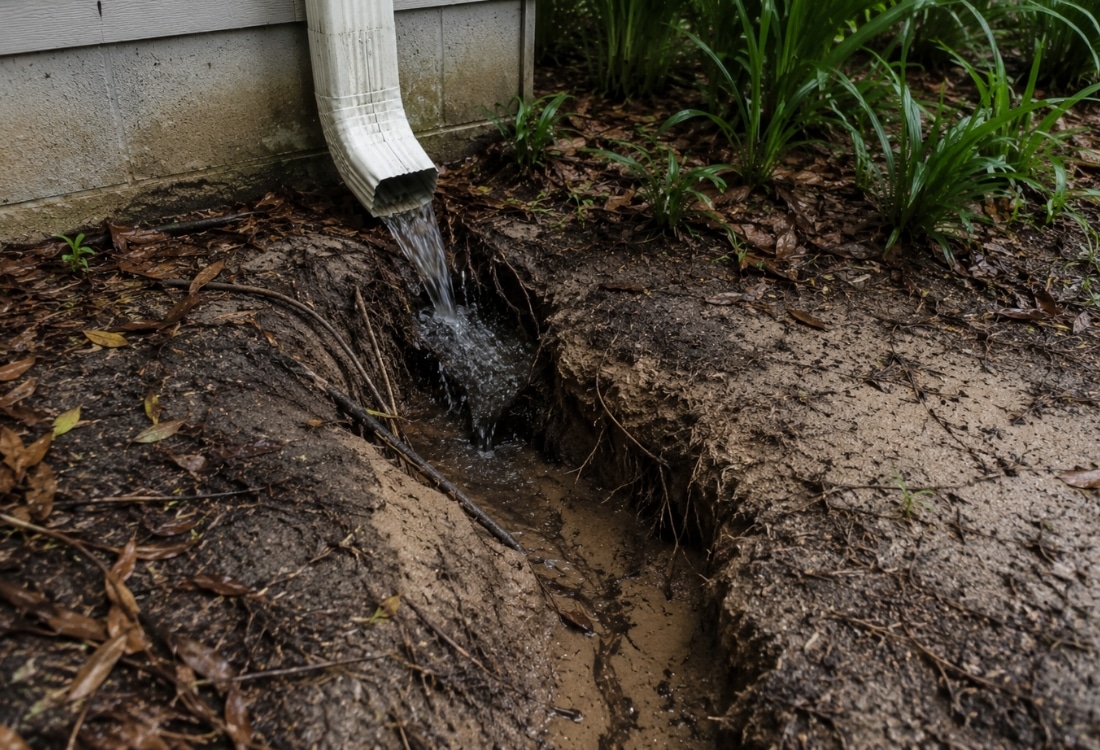
If you notice a depression, channel, or washed-out area in the soil directly below your downspout extension discharge point, water is hitting the ground with enough force and frequency to strip away the soil that supports your foundation perimeter.
Over time, this erosion creates voids beneath concrete surfaces, exposes roots, damages surrounding landscaping, and destabilizes the ground around your home. In Florida, sandy soil erodes significantly faster than clay or loam, meaning visible erosion can develop within a single wet season.
What to do: Fill eroded areas temporarily, but address the discharge point first. Redirecting water further away stops the erosion at its source.
4. Musty Odors or Crawl Space Moisture After Rain
If musty odors in your home appear or noticeably worsen within 24 to 48 hours of a rain event, surface water from short downspouts is likely reaching your crawl space through the soil, finding its way in through small leaks, cracks, or porous building materials. This is one of the clearest connections between above-ground drainage and below-floor conditions.
Moisture entering the crawl space raises humidity levels, accelerates wood rot on floor joists, and creates the damp environment where mold establishes quickly.
What to do: Check your crawl space for damp soil, water stains, or visible mold after heavy rain. Cross-reference the wet areas with the location of your downspout discharge points.
5. Uneven or Sinking Concrete Near the Foundation
Uneven or cracked concrete sidewalks, patios, and driveways near your foundation that have begun to sink, crack, or feel uneven underfoot are a sign that the soil beneath them is losing stability. Repeated water discharge from short downspouts erodes and saturates the subgrade soil, causing it to shift and compress unevenly under the weight of the concrete above.
This is particularly common at the corner of a driveway or patio that sits directly in the path of a downspout discharge point.
What to do: Do not fill or patch sinking concrete without first addressing the drainage issue. Repairs will not hold if the soil continues to be destabilized by water.
6. Appearing Foundation Cracks
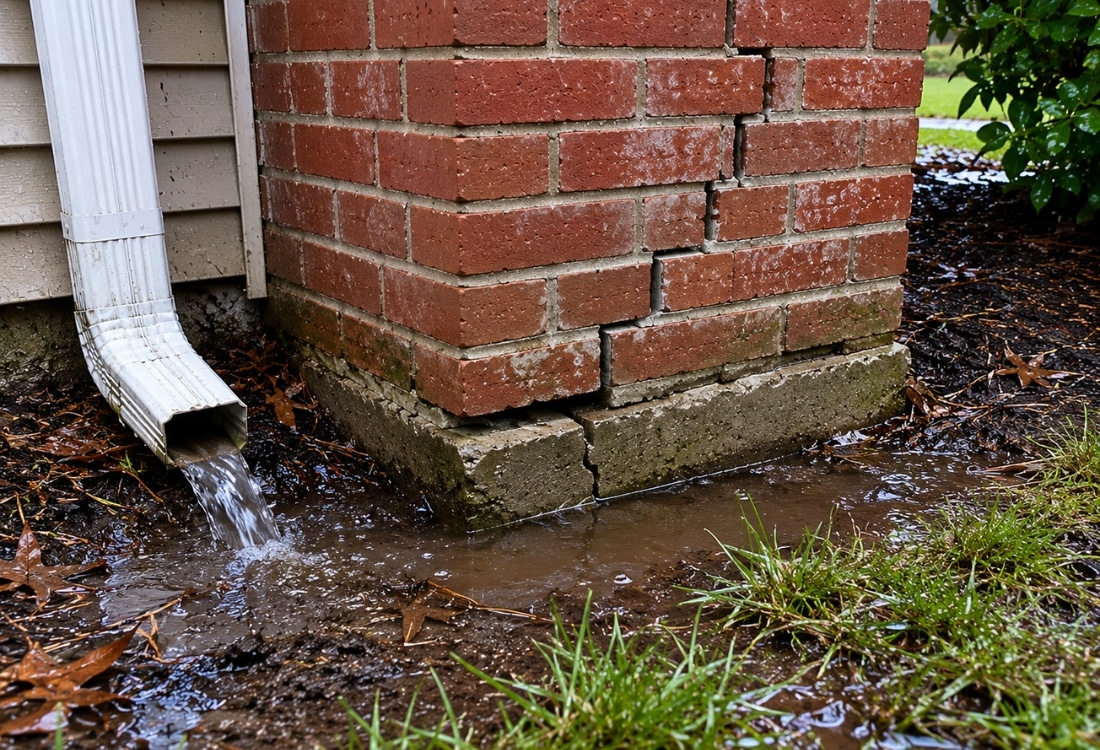
Foundation racks are among the most telling signs of differential settlement or hydrostatic pressure caused by uneven soil saturation. When one area of the foundation receives more water than another, often directly below a short downspout extension, localized saturation creates uneven pressure and movement.
Different types of foundation cracks, such as diagonal cracks radiating from corners or stair-step cracks in block foundations, are particularly associated with this type of localized moisture stress.
What to do: Document the crack width and direction and have a foundation specialist assess whether the cracking is active or stable. Check downspout discharge points near affected corners first.
7. Sticking Doors or Windows
Doors and windows that suddenly stick, no longer close flush, or show visible gaps along their frames are a sign that your foundation has shifted. When short downspouts consistently saturate soil in one area, that localized settlement causes the foundation to move unevenly, distorting the structural frame above it.
This sign often appears after a period of heavy rain followed by dry conditions, as the soil expands and contracts with the moisture cycle.
What to do: Note which doors and windows are affected and where the nearest downspout discharge points are. Uneven frame distortion near a specific corner often traces back to drainage at that corner.
If you recognize one or more of these signs around your home, installing a downspout extension that reaches the right distance from your foundation is often the first and most effective step toward resolving the problem.
How Far Should Your Downspout Extensions Reach to Protect Your Foundation?
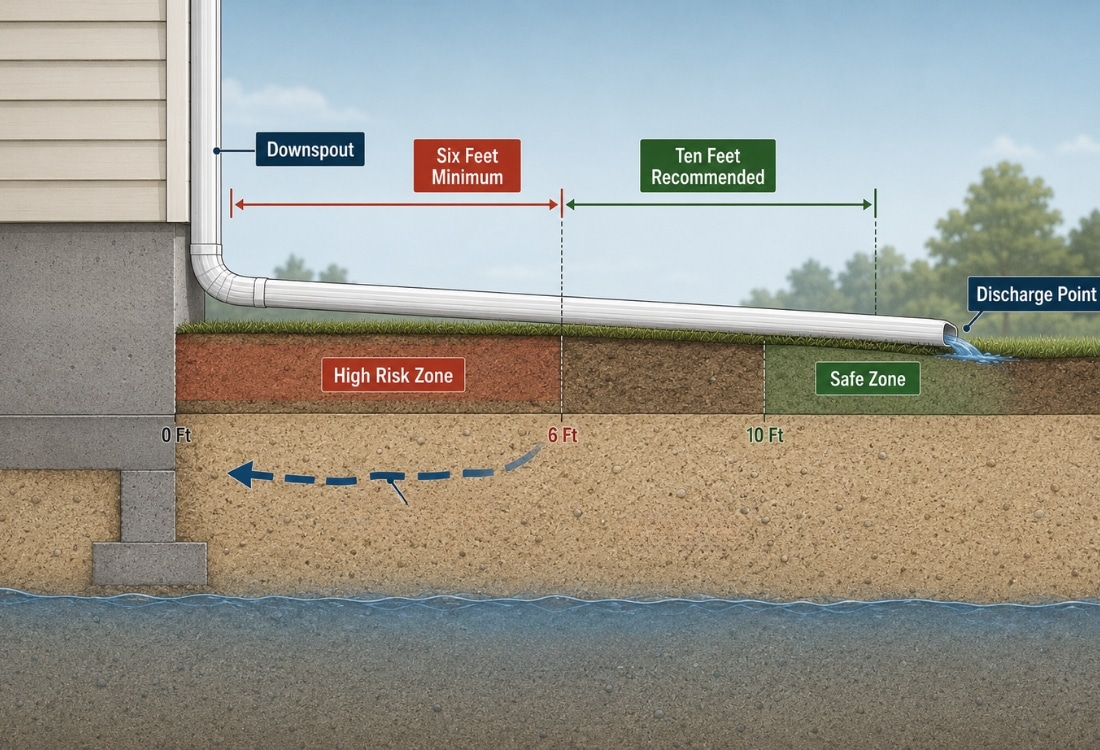
The general recommendation is a minimum of six feet from your foundation, with ten feet being a better target for most properties. Extensions shorter than six feet place the discharge point within the zone where soil saturation and erosion damage are most likely to develop.
In Florida, ten feet is the recommended starting point rather than the ideal maximum. Sandy soil and a high water table mean water deposited even six feet away can still work back toward your foundation during heavy rain events.
A professional assessment evaluates discharge distance, yard grading, and soil conditions together before recommending and installing the right extension length for each property. In cases where surface extensions alone are not sufficient, buried downspout drainage may be the more permanent solution.
Get a Professional Assessment to Extend Your Short Downspouts
Short downspouts are one of the most common and preventable causes of damage to your home’s foundation, soil erosion, and crawl space moisture problems. If you have noticed any of the signs, a professional inspection is the most reliable way to confirm whether your drainage is the cause and what the right solution looks like for your specific property.
LUX Foundation Solutions provides foundation and drainage repairs for homeowners across Jacksonville, St. Augustine, Gainesville, Ocala, Palm Coast, and surrounding areas in Northern and Central Florida. Our team evaluates discharge distance, yard grading, soil conditions, and existing drainage systems to identify the source of the problem and recommend a solution that addresses it long-term.
Call 904-921-3589 or schedule your free assessment online to get started.
ABOUT THE AUTHOR

Frequently Asked Questions
How do I know if my downspout extensions are too short and not directing water away?
The most reliable indicators are pooling water within two to three feet of your foundation after rain, soil erosion at the base of your downspout, and efflorescence on foundation walls. If any of these signs appear consistently after rain events, your extensions are likely not carrying water far enough from your foundation.
Can short downspouts cause foundation cracks?
Yes. When short extensions deposit water too close to your foundation repeatedly, the surrounding soil becomes oversaturated, increasing hydrostatic pressure on foundation walls. Over time, that pressure contributes to cracks, inward wall movement, and in more severe cases, structural damage that requires professional repair.
Can short downspouts cause crawl space moisture problems?
Yes. Water discharge too close to your foundation saturates the surrounding soil and works its way into your crawl space through small cracks, gaps, and porous building materials. Once inside, it raises humidity levels and creates conditions for mold growth, wood rot, and structural deterioration. If musty odors or damp conditions in your crawl space worsen after rain events, short downspouts are likely a contributing factor.
When should I call a professional about my downspout extensions?
Call a professional when you notice multiple signs at once, when the same signs return after adjusting your extension length, or when you see foundation cracks, crawl space moisture, or doors and windows sticking. These combinations suggest the drainage problem may go beyond extension length alone and require a full assessment of your property’s drainage conditions.
How do short downspouts affect my home’s resale value?
Visible signs of poor drainage such as foundation cracks, efflorescence, soil erosion, and crawl space moisture are among the issues home inspectors flag during a sale. Buyers and their inspectors look closely at drainage conditions around the foundation, and unresolved water management problems can affect both the sale price and buyer confidence. Addressing shorts before listing your home removes one of the most common and visible drainage red flags from the inspection report.