
What causes floors to sag? Something beneath the floor has stopped supporting it evenly. In Florida homes, that is usually shifting soil, water in the wrong place, or floor framing that has weakened over time.
Where your floor drops and what else is happening in your house point to the cause. A dip in the middle of a crawl space home is a different problem from a slope toward one corner of a slab.
This guide shows you how to determine which cause applies to your floors, covers the six most common causes in Florida, and explains when it is time to call for a professional inspection.
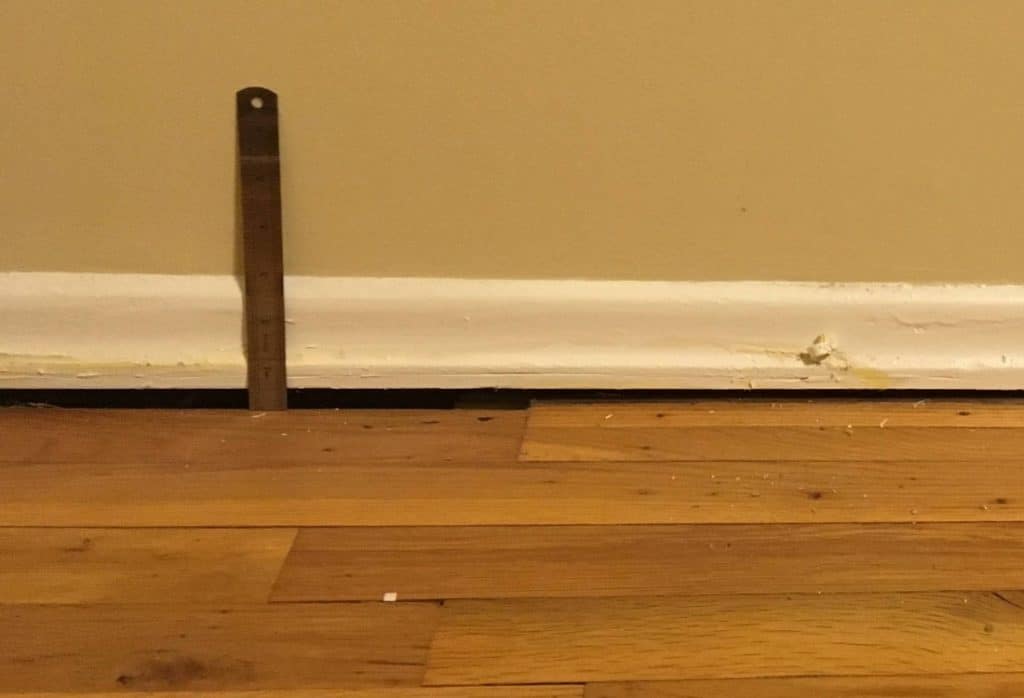
Key Takeaways
- The causes of sagging floors usually show in where and how your floor moves, so look at the pattern before you guess.
- In Florida, you will most often find soil movement, water, or weak framing behind uneven floors.
- If a dip comes with wall cracks, sticking doors, or visible gaps between your floor and walls, it may point to structural movement.
- Get a professional evaluation before you pay for any repair, because the right fix depends on the root cause.
How to Tell What Causes Uneven Floors in Your House
Start with the floor itself. Walk each room slowly and note where it dips, which way it slopes, and whether it feels uneven or soft underfoot. It also matters whether your home sits on a slab foundation or a crawl space, because a crawl space home has a raised wood floor system that a slab home doesn’t.
Match what you see to the closest row below.
| What you notice | Likely cause | Read more |
|---|---|---|
| Floors that feel bouncy or soft in your crawl space home | Damaged floor joists or floor supports weakened by moisture, rot, or termites | Unlevel floors over a crawl space |
| Floors sloping in one direction, or one corner of your home sitting lower | Soil settling or washing out on that side, often from poor drainage | Causes 1 and 2 below, or uneven concrete floors in a slab home |
| Floor sagging in the middle of your house | Weak support posts or beam over a crawl space, or settled fill under a slab | Cause 3 below |
| A dip along with wall cracks, sticking doors, or gaps between your floor and walls | Foundation settlement or movement | Signs of a sinking foundation |
| A sudden dip, soft or spongy spots, or a sunken area in your yard | Possible sinkhole activity | Cause 5 below |
| Floors that look worse after heavy rain | Water collecting near the foundation | Cause 2 below |
More than one row can fit. If you see two or three at once, you probably have more than one cause, and an inspection is the only reliable way to sort them out.
Common Causes of Sagging and Uneven Floors in Florida
These are the most common causes of uneven floors in Florida homes. More than one can be at work in your home.
1. Water and Poor Drainage
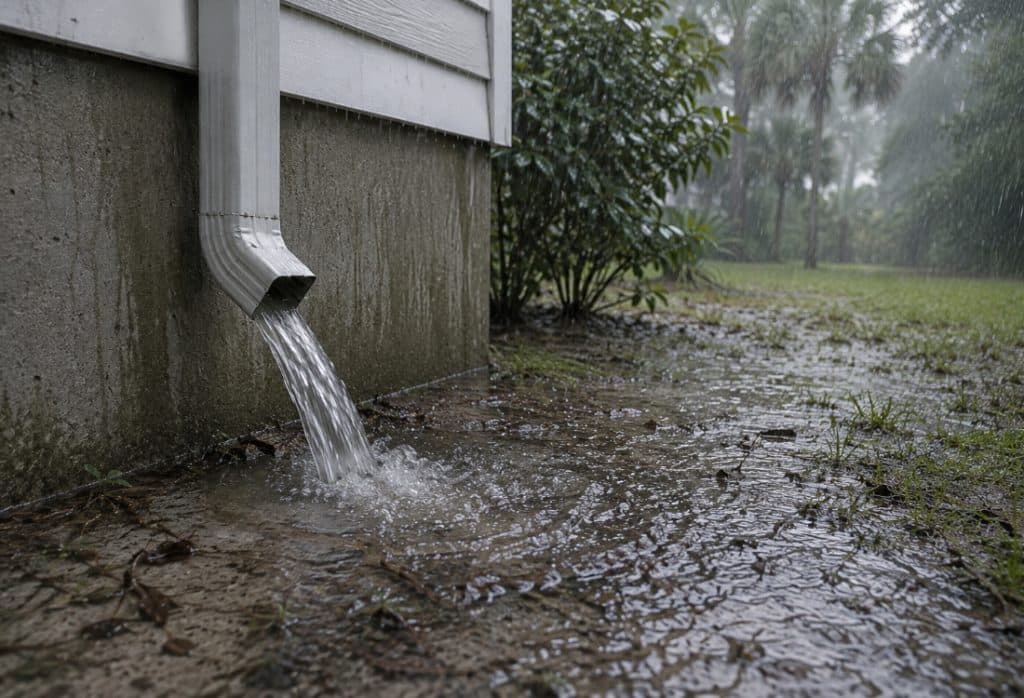
Water is behind many uneven floors in Florida, and you can often see it before you feel it. Clogged gutters, short downspouts, and low spots in your yard direct rainwater toward your foundation rather than away from it. The wet soil softens, washes out, or settles, and your floor follows. A high water table makes this worse, because the ground stays saturated after storms and takes longer to dry.
A slow plumbing leak can do the same thing from below. Water from a leaking supply or drain line can soften the soil under your slab for months before anything shows on the surface.
Walk the outside of your house after the next heavy rain. If you see water pooling near the foundation or a downspout dumping close to the wall, fix that first. Left alone, poor foundation drainage can lead to water damage and undermine your foundation over time.
2. Soil Movement and Settlement
The soil beneath your home has to stay put to keep your floors level, and in Florida it often doesn’t. Sandy soil can shift or wash out after heavy rain. In parts of the north, clay-mixed soil swells when it is wet and shrinks when it dries. Each change can leave part of your foundation with inadequate support, and your floor shows it.
Soil that was not packed down firmly when your home was built adds another risk. Poorly compacted fill can settle unevenly over the years, which is a common reason one side or one corner of a floor drops first. Learn how expansive soil affects a Florida home foundation if clay-mixed soil is common near you.
3. Weak or Damaged Framing in a Crawl Space Home
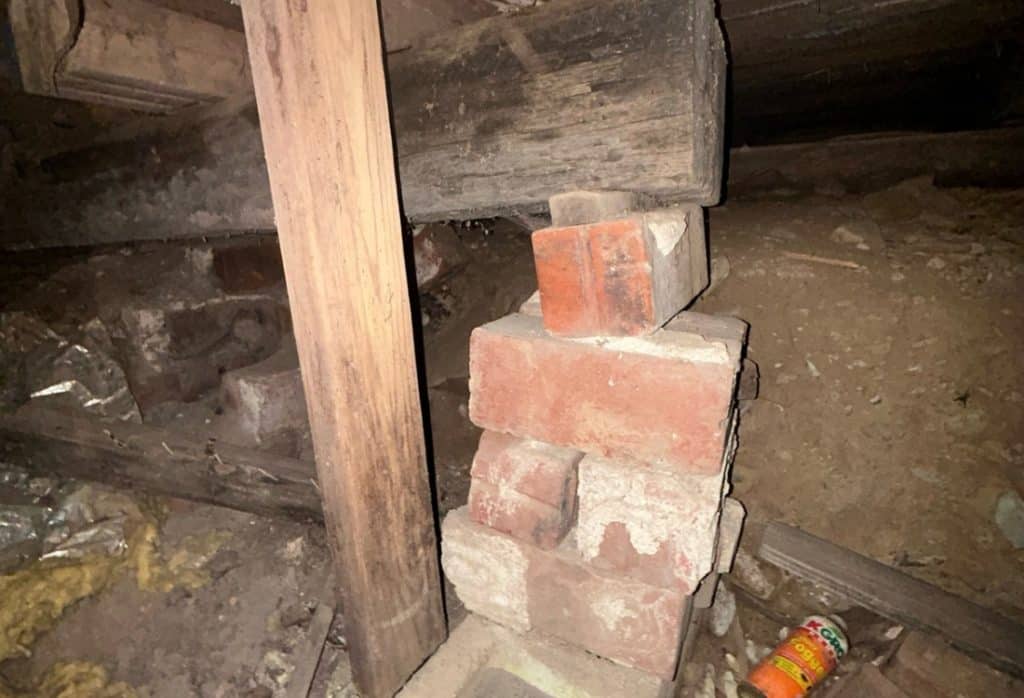
If your home sits on a crawl space, the floor rests on floor framing made up of wood joists, a main support beam, and support posts. Moisture and wood rot weaken it, termites eat wood from the inside out, and posts or brick piers can settle or lean over time, so damaged floor joists or sagging supports can make the floor feel bouncy or dip in the middle.
You can’t see most of this from inside the house, so the signs show up as the bounce, the dip, or a musty smell from below. The warning signs of a cracked floor joist can help you tell what you are dealing with.
4. Tree Roots
Large trees near your house, such as live oaks, draw moisture from the soil. Dry soil shrinks and settles unevenly, and roots can also push against the foundation. Tree roots under a foundation tend to affect the side of the house nearest the tree, so if one corner of your floor sits lower, look at which tree is on that side.
If you have a large tree near your house, mention it during your inspection so it is part of the picture.
5. Sinkholes
A sinkhole is rarely the reason for an uneven floor, but some parts of Northern and Central Florida sit on limestone, where water can slowly erode the ground beneath. The Florida Geological Survey explains how sinkholes form in Florida. Sinkhole signs to watch for include a sudden dip, soft or spongy spots in the floor, doors and windows that suddenly stick, new cracks in the driveway or sidewalk, and a sunken or collapsing area in your yard.
If you see several of these at once, don’t wait to see if it settles. Call for an inspection right away and keep people away from any sunken area in the yard.
6. Age and Original Construction
Older homes were often built with lighter beams, thinner structural supports, and materials that wear out over time. As those structural components weaken, the floor can sag in places that carry the most load. A home built with undersized framing or on poorly prepared ground can develop structural issues years later.
This cause often shows up with the others. A soft floor in an older crawl-space home may have worn framing behind it, plus moisture or soil movement.
When Sagging Floors Are Serious
A small slope that has been the same for years is not the same as a floor that is changing. The change is what matters. Call for an inspection soon if you notice:
- The dip or slope getting bigger, even slowly.
- New cracks in your walls, ceilings, or slab.
- Doors and windows that stick or no longer latch, including on the second floor.
- Visible gaps between your floor and walls.
- Soft or spongy spots when you walk.
If the floor drops suddenly, don’t wait. Call right away.
None of these means your house is in danger today, but together they can point to an underlying structural problem. When several show up at once, foundation movement is the likely cause. Our guide to the signs of a sinking foundation explains how to tell it apart from normal settling.
What to Do First If You Notice Sagging or Uneven Floor
- Write down what you see. Note where the floor dips and when you first noticed it. Take dated photos and check again in a few weeks to see whether anything has changed.
- Fix the easy water problems first. Clear your gutters, extend short downspouts, and look for low spots near the house.
- Watch for leaks. An unexplained jump in your water bill or damp spots near the floor can point to water intrusion or a plumbing leak under the home.
- Don’t shim or jack the floor yourself. Shimming or covering a dip hides the symptom and leaves the underlying cause working.
- Get an inspection before you pay for a repair. The right fix depends on what is causing the problem. Once you know the cause, our sagging floor repair options show how it is fixed.
Get a Free Foundation Inspection in Florida
Floors sag when something beneath them loses support, and the cause depends on your soil, the water around your home, and whether you have a slab or a crawl space. Look at where and how your floor moves, fix the water problems you can see, and don’t cover up a dip until you know why it is there.
If you want to know what is happening beneath your floors, LUX Foundation Solutions offers a free foundation inspection and estimate for homeowners in Jacksonville, Gainesville, Ocala, Palm Coast, and St. Augustine. Our experienced team will look at your floors, the soil and drainage around your home, and the framing under the floor if you have a crawl space. You’ll get a plain explanation of the cause and your foundation repair options, with no pressure to decide that day.
Call 352-605-6592 or request your free home foundation assessment.
Frequently Asked Questions
Why are my floors sagging in the middle of the house?
A dip in the middle usually indicates that the support beneath that part of the floor has weakened or settled. In a crawl space home, that is often a support post or beam. In a slab home, it can be filled or soil that has settled or washed out under the slab. An inspection can tell you which one it is.
Are sagging floors a sign of foundation problems?
Sometimes. A sagging floor can come from the foundation, from the floor structure in a crawl space home, or from water and soil problems under your home. If you also see wall cracks, sticking doors, or gaps between your floor and walls, foundation movement becomes more likely. Only an inspection can confirm it.
Can sagging floors be fixed without replacing the floor?
Often, yes. Your floor sags because something under it lost support, so the repair starts with that support. Whether the floor itself needs work afterward depends on the extent of the damage. You can see how it works on our sagging floors page.
Is it safe to live in a house with sagging floors?
A small dip that has not changed is often not an emergency, but you shouldn’t ignore it. If it is getting worse, feels spongy, or comes with other signs, get an inspection soon and keep heavy loads off the weak spots until someone has looked at them. A sudden drop of several inches is different, so call right away.
How much does it cost to fix sagging floors?
It depends on the cause, the size of the area, whether the problem is in the soil, the framing, or the foundation, and which repair method is appropriate. Two homes with similar-looking dips can need very different repairs. A free inspection gives you a price for your home, not a guess.
Are uneven floors normal in an older home?
A slight slope can be normal in an older home, especially if it has looked the same for years. What is not normal is a floor that is changing: a slope that grows, new cracks, or doors that start to stick. If you’re not sure whether yours has changed, mark the spot, take photos, and check again in a few weeks.