

Roof Runoff Redirected with Complete Downspout Drainage System in Jacksonville, FL

Table of Contents

Written By Bridget Stieb, Director of Marketing at LUX Foundation Solutions
Reviewed by LUX’s foundation repair specialists serving Northern Virginia & Florida

The Problem: Short Downspouts Dumping Roof Runoff at the Foundation

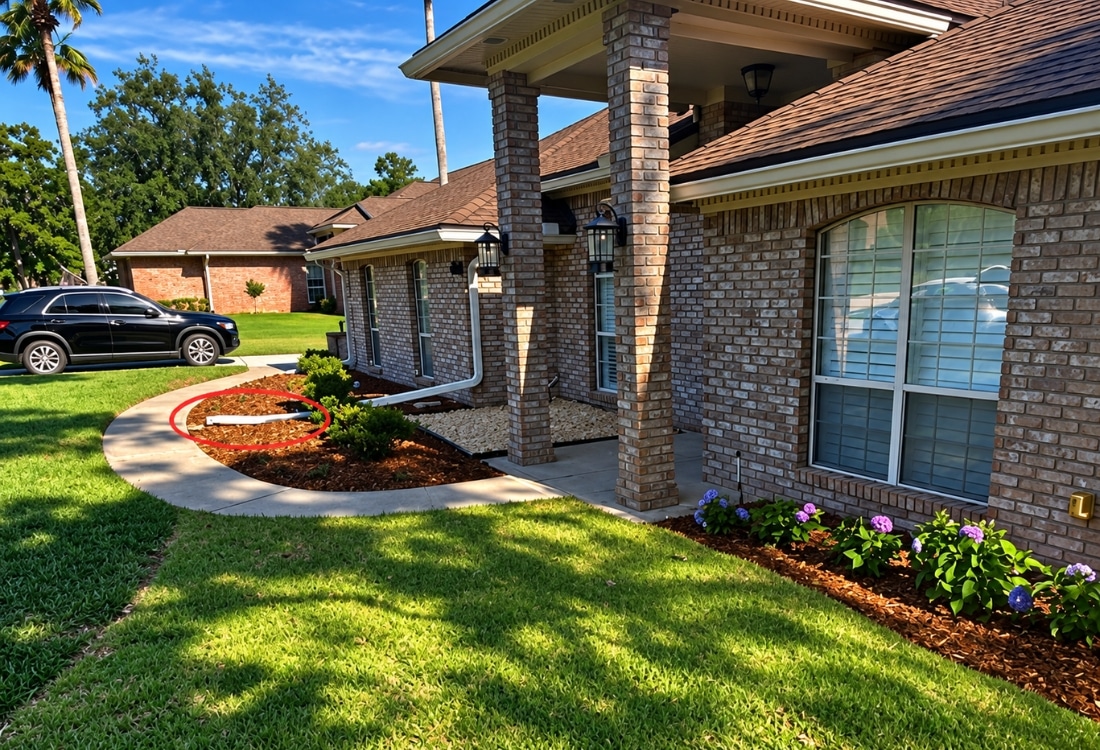
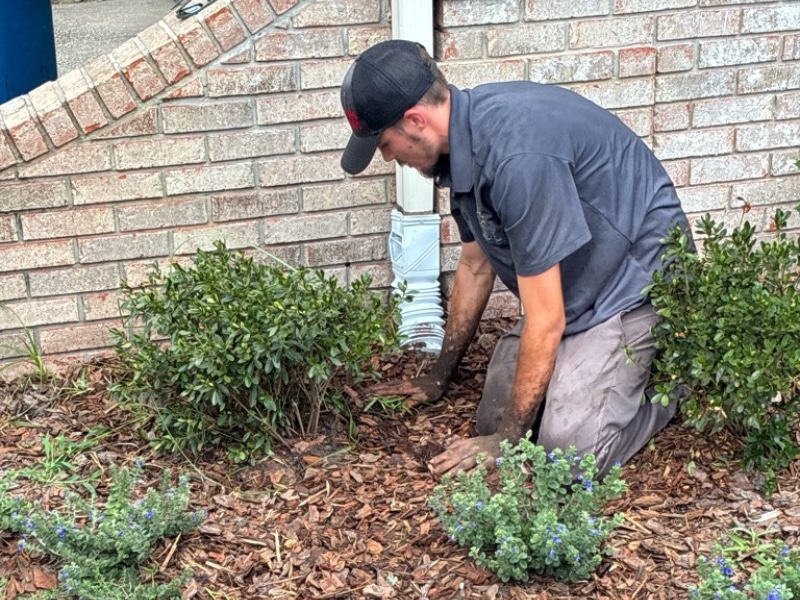
Pipe running through mulch bed near brick foundation before underground downspout drainage installation in Jacksonville, FL.

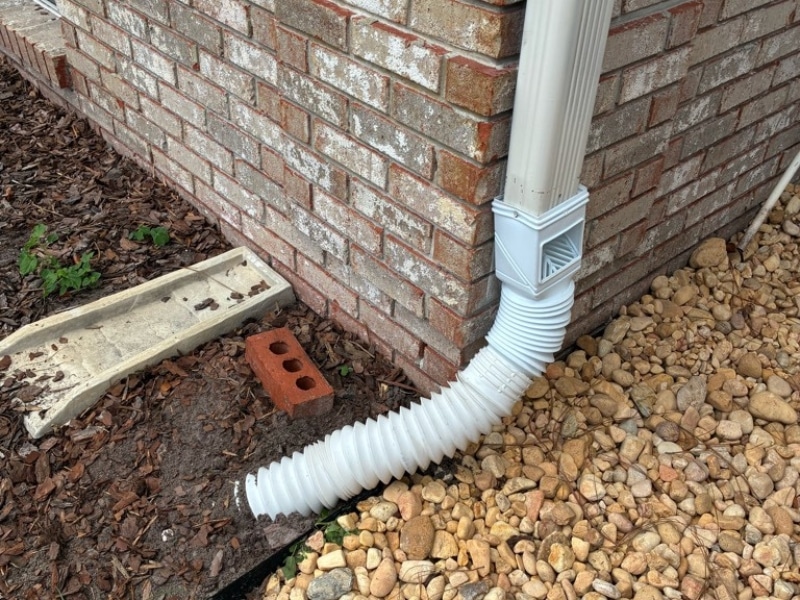
Phil’s brick home in Jacksonville, FL, had two short downspouts discharging roof runoff directly at the foundation base with nowhere for the water to go. Every time it rained, water soaked into the soil right where it should stay dry.

Here is what was documented:

  • Two short downspouts terminating at the foundation base with no underground outlet.
  • Roof runoff concentrating at the same spot with every rain event.
  • No controlled drainage path to carry water away from the home.

In Jacksonville, where sandy soil erodes quickly under repeated concentrated water discharge, this kind of setup compounds over time. Water pooling at the foundation base increases moisture pressure against the wall and accelerates soil erosion near the home.

These are common foundation drainage problem signs that get worse with every rain event if left unaddressed.

Our Solution: Underground Downspout Drainage System Installation 

To stop roof runoff from reaching the foundation, LUX designed and installed a complete underground downspout drainage system at Phil’s home. Every component was purpose-built to capture water at the source, move it away from the structure through a connected underground network, and discharge it safely well away from the home. 

Here is how the installation was completed:

Step 1: Site Assessment and Planning 

Before any digging started, the team walked the property to figure out where the water needed to go. They checked the downspouts, identified the best discharge point, and confirmed the required depth and pipe size. This planning step matters because it prevents digging twice or rerouting mid-job. 

Step 2: Dug the Trench 

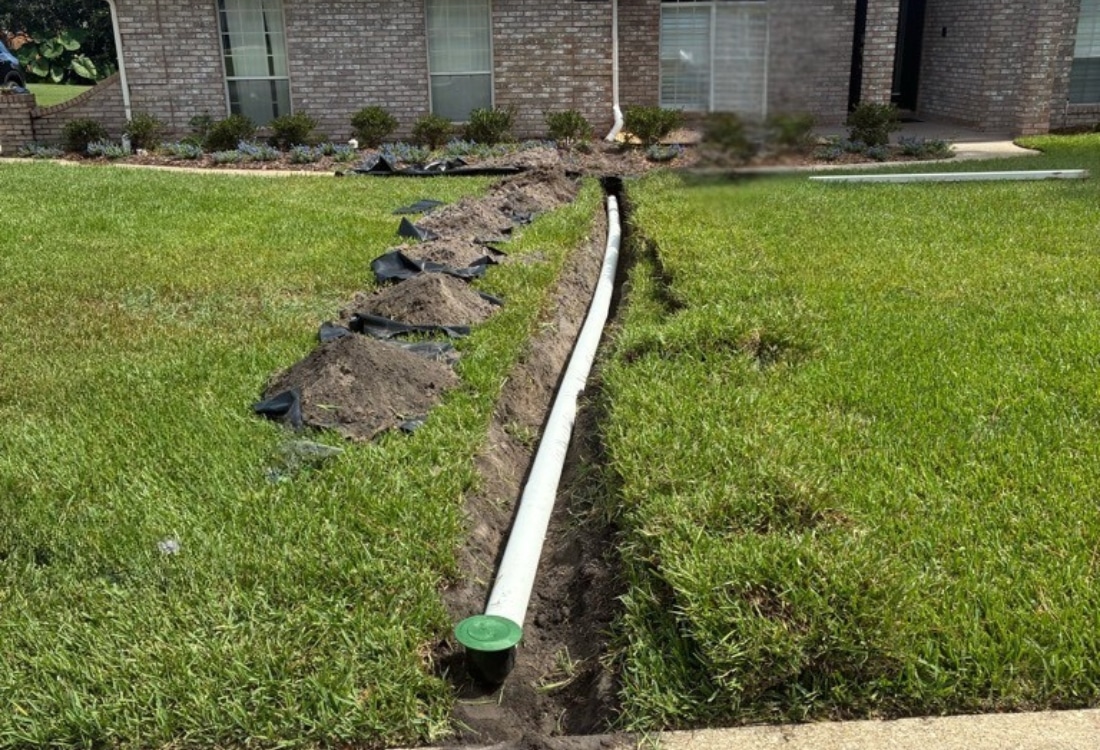
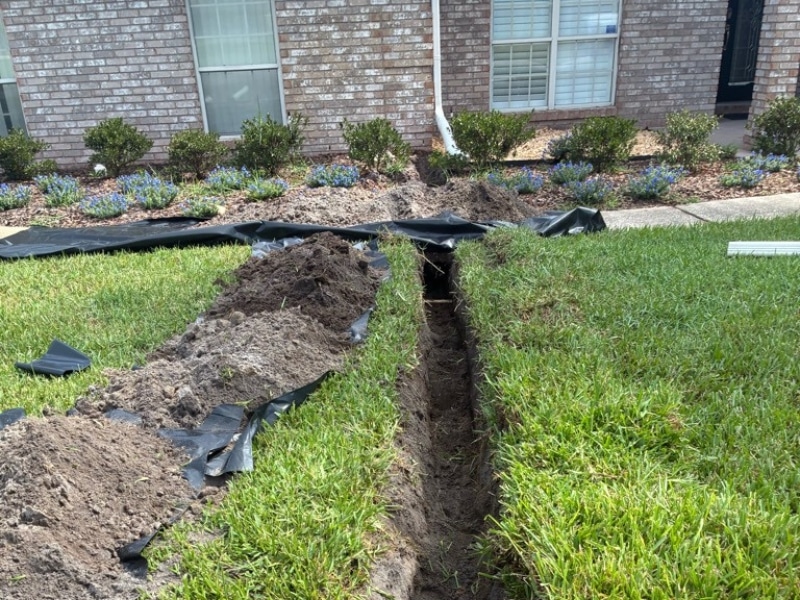
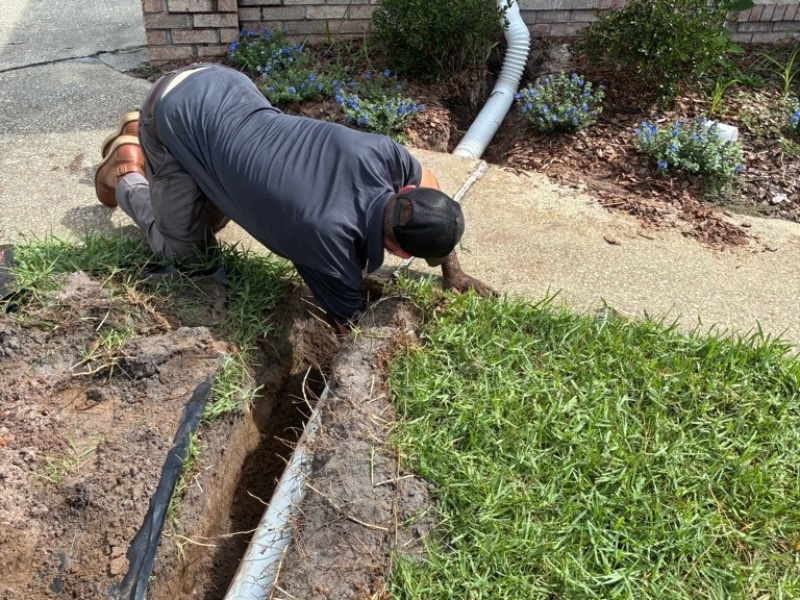
Once the plan was set, the crew dug a trench across the front yard, running from each downspout out to the discharge point. The trench was cut deep and wide enough to fit the pipe properly and protect it. Where the trench crossed under the walkway, we took extra care to keep the pipe at the correct depth so it could handle the weight of the walkway above without shifting or getting crushed over time. 

Step 3: Connected the Downspout Adapter 

Attached a downspout adapter directly to the bottom of the existing gutter downspout at the foundation wall. This adapter links the gutter system to the underground pipe, sealing the connection so rainwater flows straight into the pipe instead of spilling out onto the ground or pooling near the foundation. 

Step 4: Laid the Pipe Underground Extension 

With the trench ready and the downspout connected, we laid solid drain pipe from each downspout connection to the discharge point, about 80 feet total between both lines. This pipe carries rainwater well past the foundation instead of letting it sit near the base of the home, which is often what causes soggy yards, cracked walkways, or water finding its way into a crawl space. 

Step 5: Pop-Up Emitter Installation 

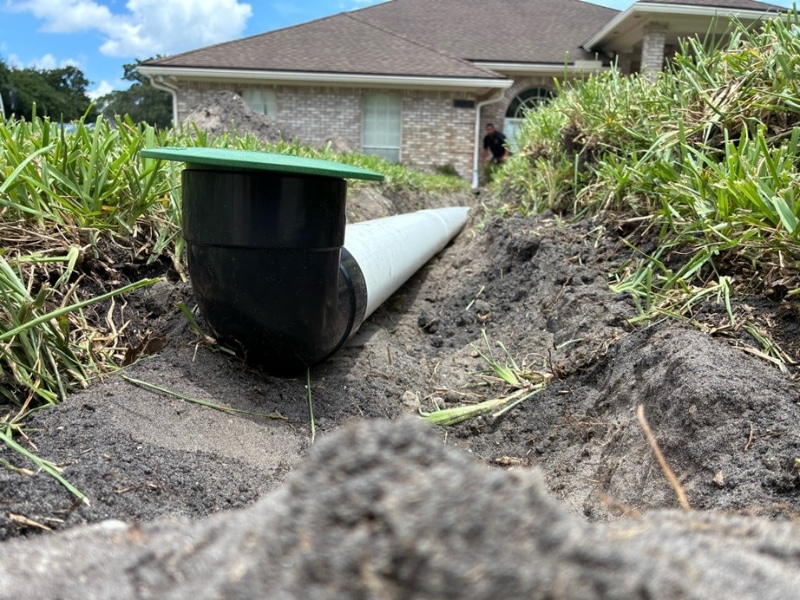
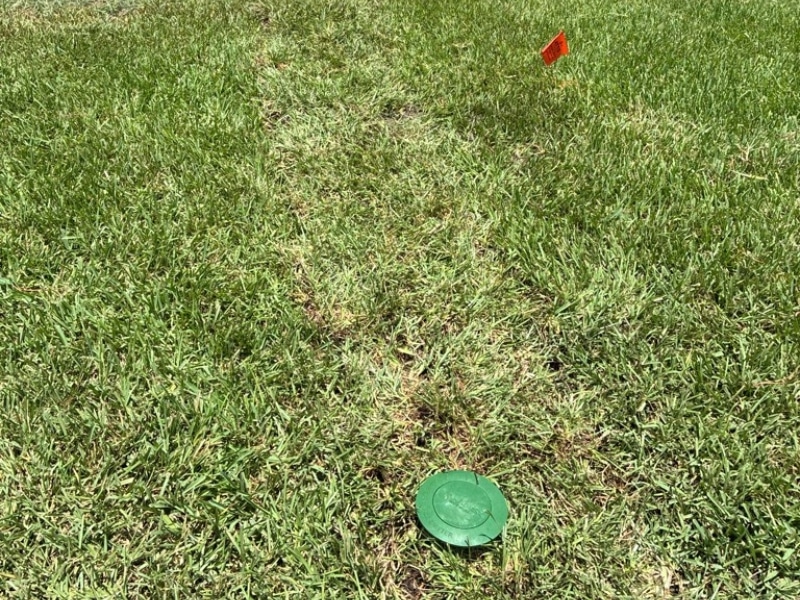
Each line ends in a green pop-up emitter, installed flush in the grass and positioned well away from the home. The emitter opens automatically when water flows through the system and closes when dry, keeping debris and pests out of the pipe between rain events. 

Placing the emitter far enough from the house solves the drainage problem, since moving the discharge point just a few feet closer to the wall would not accomplish much. 

Step 6: Backfilled the Trench 

Once the pipe and emitter were set and checked for the right slope, the team shoveled soil back into the trench by hand, packing it down firmly around the pipe as they went. Backfilling this way keeps the pipe from shifting once buried and helps the ground settle evenly over time, instead of leaving a sunken line in the yard a few months later. 

Step 7: Site Restoration 

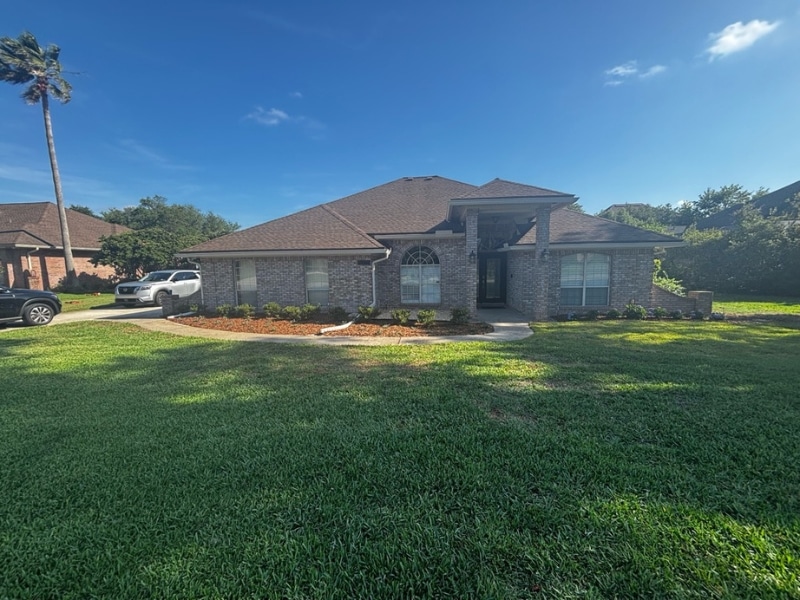
The team applied grass seed and straw over the areas disturbed during digging and cleaned up the site before leaving. The finished result leaves no visible disruption to the property. The only sign of the drainage system is the small green emitter cap sitting flush in the grass. 

The Result: Roof Runoff Redirected and Foundation Protected in Jacksonville, FL

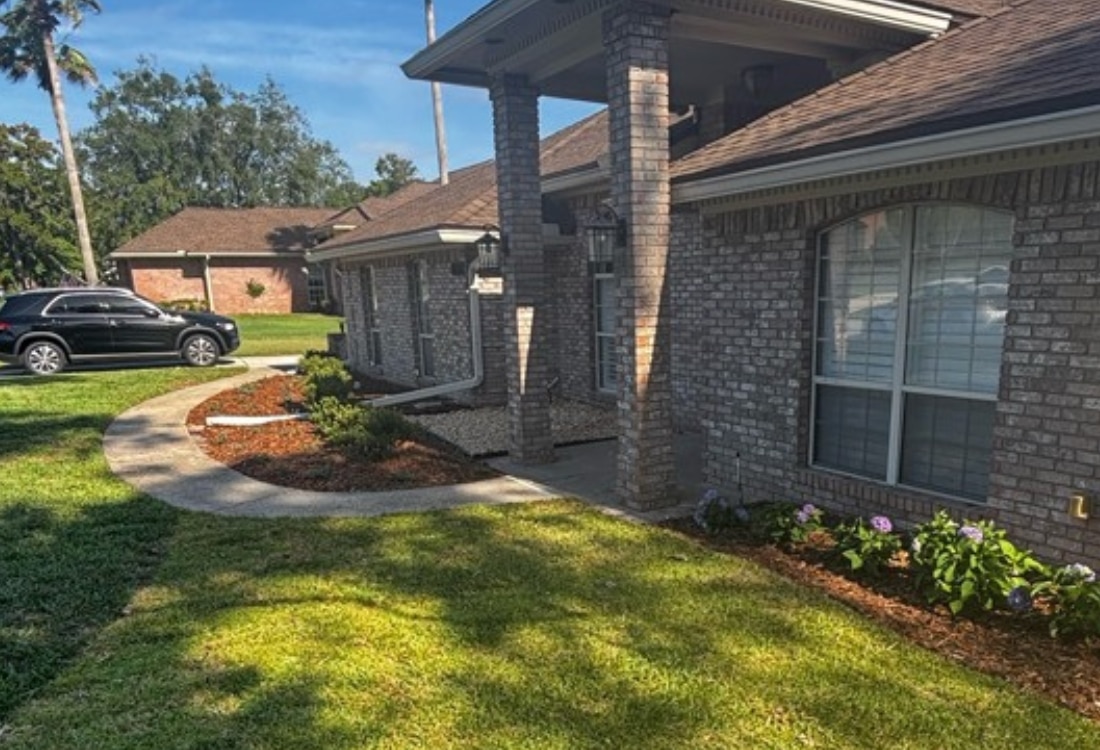
Short downspout extension lying on the ground at before underground downspout drainage system installation in Jacksonville, FL. Green pop-up emitter installed flush in grass after underground downspout drainage system installation in Jacksonville, FL.

Before the installation, every rain event sent roof runoff straight to the base of Phil’s foundation with nowhere to go; after the underground downspout drainage system was complete, that stopped.

The results:

✅ Roof runoff that used to discharge at the foundation base now travels 80 feet underground before it surfaces; the foundation stays dry regardless of how hard it rains. 

✅The discharge line routes all collected water to the right side of the home through one connected underground network; no more water concentrating at the wall.

✅The pop-up emitter releases water well into the yard away from the structure, so the discharge point is where it should have been from the beginning.

✅The filter downspout cleanout gives Phil a permanent maintenance access point without ever having to dig up the yard.

✅The lawn was fully restored and the site left clean; the only visible sign of the system is the green emitter sitting flush in the grass.

Learn more about our downspout extension and yard drainage installation services across Jacksonville and Northeast Florida. 

Stop Roof Runoff Before It Reaches Your Foundation 

If your downspouts are short and dump water at the foundation base with no underground outlet, every rain event deposits water where it shouldn’t be. In Jacksonville and across Northeast Florida, sandy soil absorbs that repeated discharge quickly at first, but over time it erodes, saturates, and starts pushing moisture against the wall.

LUX Foundation Solutions provides downspout extension and complete waterproofing and drainage solutions in Northern Florida communities, backed by proper engineering and lasting results.

Contact us today at 904-231-9926 for a free on-site drainage assessment.

Gallery

About the Author

Bridget Stieb

Bridget is the Director of Marketing at Lux Foundation Solutions, bringing firsthand knowledge of the foundation repair, basement waterproofing, crawl space repair, concrete repair, and seawall needs of homeowners across Northern Virginia, the Shenandoah Valley, North Central Virginia, West Virginia, and Florida. She works closely with structural repair specialists to translate real-world inspection and repair data into homeowner guidance on foundation, basement, crawl space, and concrete issues. With a deep understanding of local homeowner concerns in both regions, she is committed to delivering clear, trustworthy content that helps families protect their homes. When she is not working on a marketing strategy, Bridget enjoys spending time with her family, friends and being outdoors.

Related Resources

SHARE:

Scroll to Top