
Florida’s sandy soil, high water table, and hurricane season can create foundation challenges that not every repair method handles well. When a foundation begins to settle or shift in these conditions, the repair solution needs to work with the environment, not against it.
Helical piers, also known as helical piles or screw piles, can be well suited to certain Florida foundation conditions. They anchor deep into stable, load-bearing soil below weaker surface layers, provide immediate structural support without waiting for concrete to cure, and use corrosion-resistant materials designed for durability in Florida’s humid, moisture-rich environment.
This guide explains the seven benefits of helical piers, why they can be particularly useful for Florida homes, and how to determine whether they are the right solution for your foundation.
Key Takeaways
- Helical piers can transfer structural loads through weaker surface soils to stable, load-bearing soil below, helping stabilize foundations affected by settlement or shifting.
- Helical piers can provide immediate structural support after installation without waiting for concrete to cure.
- Limited excavation can help reduce disruption to landscaping and other areas around the foundation.
- Helical piers can adapt to different soil and site conditions, depending on the foundation and project’s requirements.
- Helical piers can reach the required depth and provide load-bearing support without depending on the weight of the structure.
- Properly designed and installed helical piers can provide long-term foundation support in demanding soil and moisture conditions.
- Helical piers can be used for both existing foundation repair and new construction when site conditions call for deep foundation support.
What Makes Helical Piers Different From Other Foundation Repair Methods
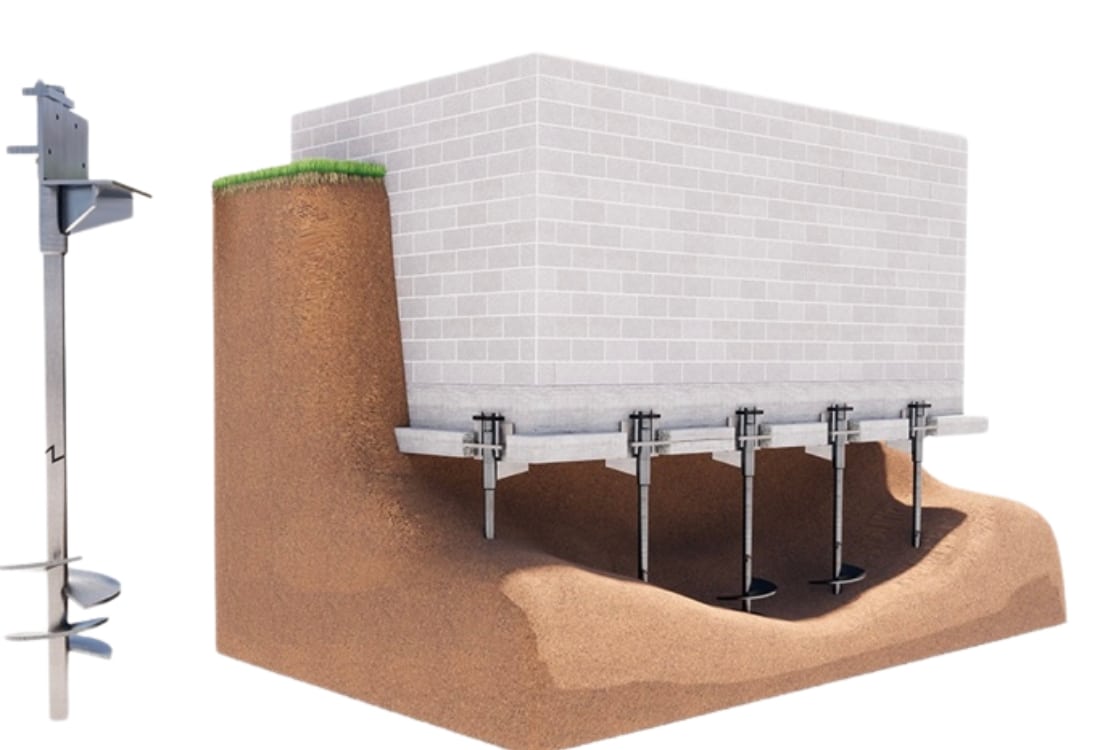
Helical piers use steel shafts and helical plates that are hydraulically installed into the soil until they reach stable, load-bearing ground. The installation process uses hydraulic equipment to rotate the pier into the ground. A steel bracket then connects the pier to the foundation footing, transferring the structural load from unstable surface soil to stable soil below..
What sets them apart from other deep foundation solutions is that they do not rely on the weight of the structure for installation depth or capacity. They reach stable soil independently, which gives contractors precise control over depth and load-bearing capacity regardless of the structure above.
For a full breakdown of how helical piers compare to push piers, see our push piers vs helical piers guide.
7 Benefits of Helical Piers for Florida Home Foundation Repair
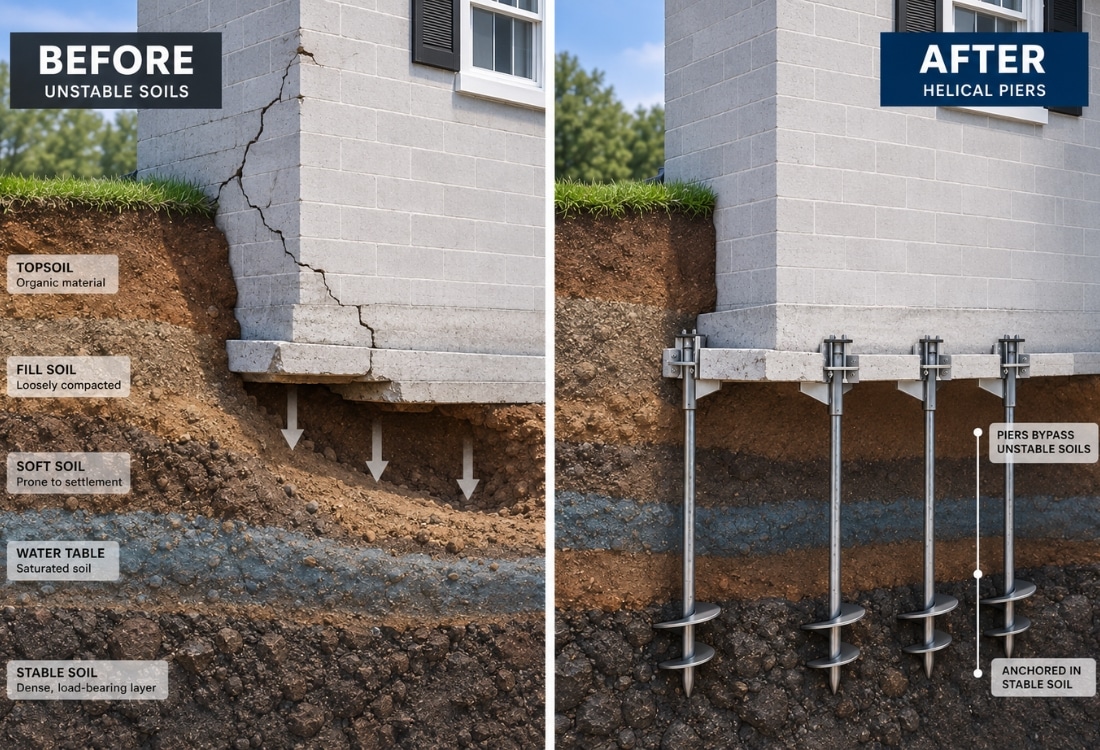
Helical piers offer many benefits when a foundation needs deeper, more reliable support. The right benefits depend on the soil conditions, foundation type, structural load, and the property’s repair needs.
1. Reach Stable, Load-Bearing Soil
When poor soil conditions prevent the surface soil from adequately supporting a foundation, helical piers can extend through weaker layers to reach stable, load-bearing soil. This transfers the structural load to a more suitable soil layer and can help stabilize foundations affected by foundation settlement.
For Florida homes, this can be particularly useful where soil conditions, moisture, and a high water table affect foundation stability. The required installation depth depends on the site’s soil conditions and structural requirements.
2. Provide Immediate Structural Support
Unlike foundation repairs that require concrete to cure before carrying a load, helical piers can provide immediate structural support once properly installed. This allows the pier system to begin transferring the foundation’s load to stable soil without a curing period.
For homeowners, this can mean less waiting before the foundation receives additional support. This is one practical benefit of helical piers when foundation settlement requires stabilization.
3. Minimize Excavation and Property Disruption
Helical piers can be installed without the extensive excavation required by more invasive foundation repair methods, helping reduce disruption to the surrounding property. This is especially useful when access is limited, or homeowners want to minimize disturbance to landscaping and other areas around the foundation.
For Florida homeowners, this makes minimal property disruption a practical benefit of helical piers when deep foundation support is needed.
4. Adapt to Different Site Conditions
Helical piers can be used across challenging soil conditions and different site conditions when a project requires deep foundation support. They can be considered for properties with variable soil conditions or excessive moisture levels, depending on the foundation and site requirements.
For Florida homeowners, this flexibility can make helical piers a practical option when site conditions require deeper foundation support.
5. Do Not Rely on the Structure’s Weight for Installation
One of the key benefits of helical piers is that they do not depend on the weight of the structure to reach the required installation depth or load-bearing capacity. The piers are rotated into the soil independently until suitable support is reached.
This can make them useful for certain Florida foundation projects where a pier system that relies on structural weight is less suitable.
6. Provide Long-Term Foundation Stability
When properly designed and installed, helical piers can provide long-term support for foundations affected by settlement or shifting soil. Their steel construction and corrosion-resistant materials are designed to withstand demanding soil and moisture conditions.
For Florida homes, this can make long-term foundation stability one of the important benefits of helical piers, particularly when the repair requires support beyond unstable surface soil.
7. Support Both Foundation Repair and New Construction
This versatility makes them a practical option when a project needs reliable foundation support beyond the upper soil layers.
Are Helical Piers Right for Your Florida Home?
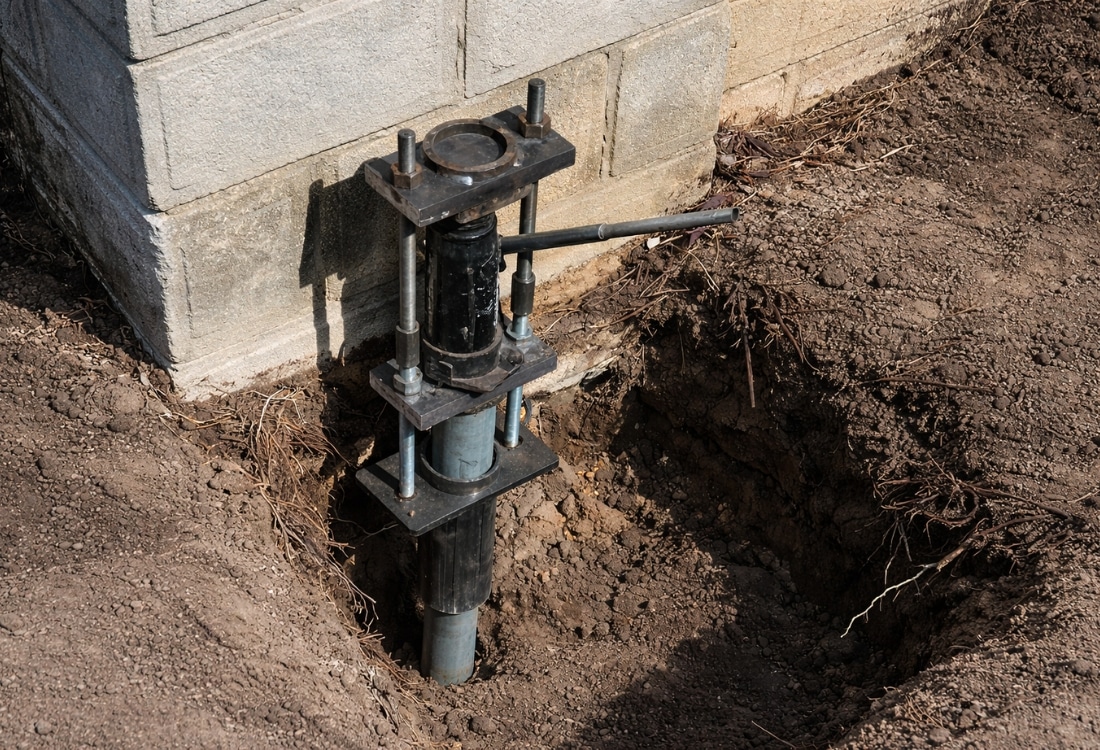
Helical piers can be a strong option when a foundation needs deeper support because of settlement or unstable soil. However, they are not automatically the right choice for every foundation problem. The appropriate repair method depends on the site’s soil conditions, foundation systems, and the cause of the movement or settlement.
When helical piers are commonly used
Helical piers are typically considered when:
- The foundation is sinking because of unstable or compressible soil.
- Surface soil cannot adequately support the structural load.
- The property has consistently wet soil or a high water table.
- Limited access makes minimal excavation desirable.
- The project requires deeper foundation support.
The right next step
The only reliable way to determine whether helical piers are appropriate for your foundation is a professional assessment that evaluates soil conditions, the extent of movement, and your home’s structural requirements. A thorough foundation assessment gives you the information needed to make a confident decision about the right repair path for your specific situation.
Conclusion
Helical piers can be a practical foundation repair option for Florida homes dealing with settlement, unstable soil, or a high water table. Their ability to reach stable load-bearing soil below the surface layer, combined with immediate structural support and corrosion-resistant construction, creates a solid foundation well suited to Florida’s soil and climate conditions.
Whether helical piers are the right solution for your specific foundation depends on a professional assessment of your site conditions, the extent of any movement, and your home’s structural requirements.
Frequently Asked Questions
What are the main benefits of helical piers for foundation repair?
Helical piers offer many benefits, including reaching stable load-bearing soil, providing immediate structural support, minimizing excavation, adapting to different site conditions, and providing long-term foundation support when properly designed and installed.
Why are helical piers useful for Florida homes?
Helical pier foundations can be useful for Florida homes when foundation settlement or shifting requires deeper structural support. They can extend through weaker surface soils to reach more suitable load-bearing soil and can be used in certain moisture-rich and high-water-table conditions.
Do helical piers require extensive excavation?
No. Unlike traditional concrete foundations that require significant excavation, helical piers can be installed with limited excavation, reducing disruption to landscaping and other areas around the foundation. This can be useful when access is limited or minimizing property disturbance is important.
Can helical piers be installed in wet soil or high-water-table areas?
Helical piers can be considered for properties with elevated moisture and high-water-table conditions, depending on the site’s soil and foundation requirements. Corrosion-resistant materials can also help the system maintain load capacity and withstand demanding soil and moisture conditions.
Do helical piers rely on the home’s weight for support?
No. Helical piers are installed independently by rotating them into the soil until they reach the required depth and load-bearing capacity. This allows the pier system to provide support without depending on the weight of the structure for installation depth or capacity, which is also why helical piers are used in applications beyond residential foundations, including retaining walls and other structural support needs.
Are helical piers suitable for both new construction and foundation repair?
Yes. Helical piers can be used for both existing foundation repair and deep foundation projects in new construction when site conditions require deeper foundation support. For existing homes, they can help stabilize foundations affected by settlement or shifting soil, while new construction may use them where deeper support is needed.